TanzaniaTourism
Tanzania holds the headline acts of an East African journey: the Serengeti's annual migration of two million wildebeest, the Ngorongoro caldera, the snow on Kilimanjaro's equatorial summit, and the Swahili spice islands of Zanzibar — all reachable from a single international gateway in Arusha or Dar es Salaam.
A country measured in horizons.
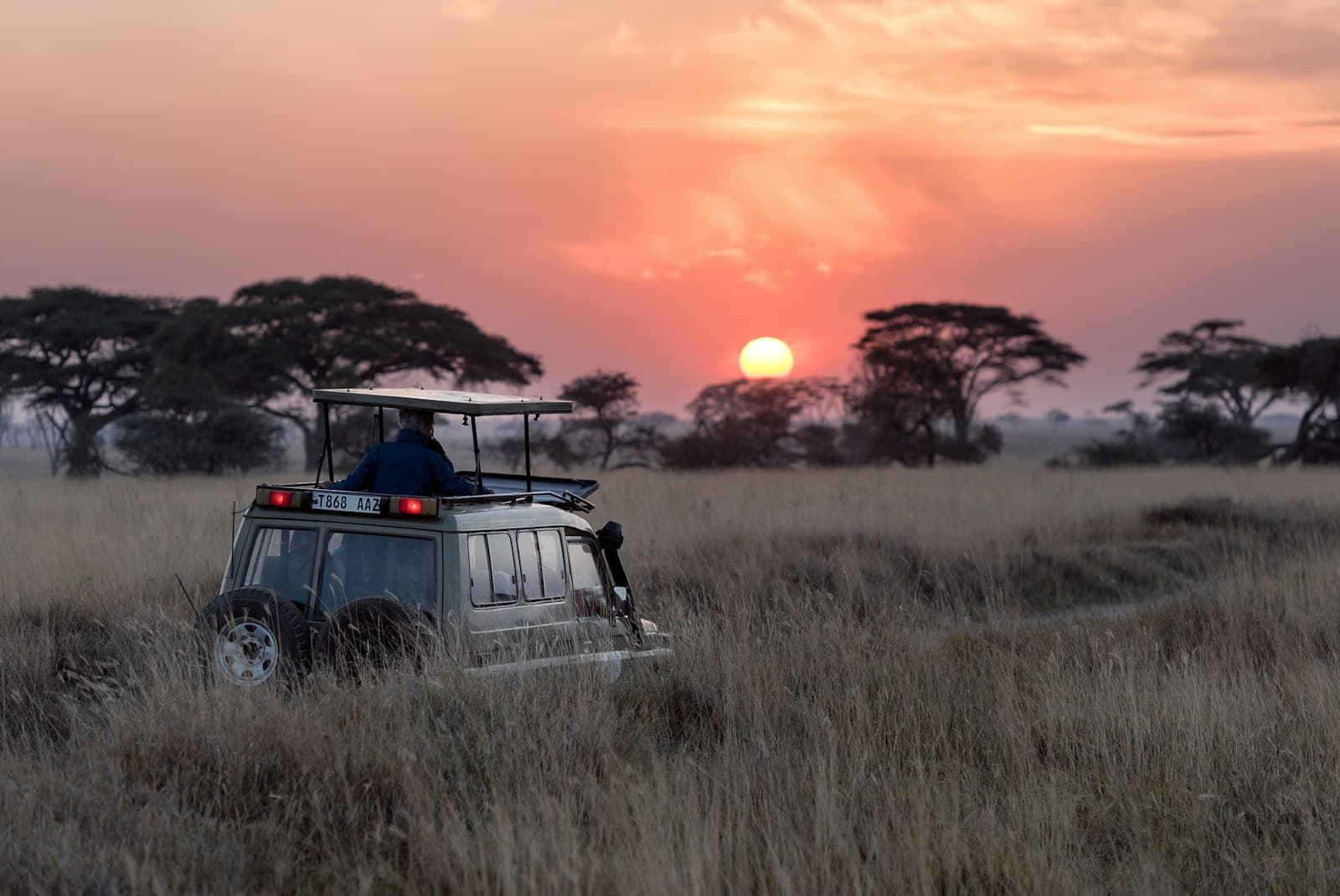
Tanzania's geography is unusually generous. Mount Kilimanjaro, Africa's highest point at 5,895 metres, rises from the savanna in clear-day view of the Kenyan border. Two hours west, the Ngorongoro Crater drops 600 metres into a self-contained ecosystem dense with lions, elephants, and the eastern population of black rhino. Beyond Ngorongoro, the Serengeti opens up — 14,750 km² of plain that absorbs the great wildebeest migration in its July–September river-crossing months. The Selous and Ruaha reserves to the south are larger still, with a fraction of the visitors.
Offshore, Zanzibar is its own country in everything but the constitution. Stone Town's coral-stone houses, carved doors, and thousand-year Swahili trading history are UNESCO-listed; a half-day's drive east, the beaches at Paje and Jambiani sit on a turquoise lagoon protected by a barrier reef. Pemba and Mafia islands further north and south remain quieter dive destinations, with Mafia's whale-shark season running October through February.
Travel here is well-supported but not casual. The northern circuit (Arusha → Lake Manyara → Ngorongoro → Serengeti) is paved as far as the crater rim and rough thereafter; small-plane safaris cut the drive times in half. Dry season (June–October) concentrates wildlife at waterholes and runs the migration river crossings; the calving season (January–March) is quieter and equally rich. Tanzania's eVisa system at eservices.immigration.go.tz handles most major nationalities; processing typically takes 10 business days, so apply two weeks ahead.
Practical info.
Climate
Best time: June–October (dry, peak migration river crossings); January–March (calving, quieter).
Visa & entry
eVisa available; visa-on-arrival at major airports. Apply at eservices.immigration.go.tz at least 10 business days before travel. USD 50 single-entry; USD 100 multiple.
Money
Tanzanian shilling (TZS). Mobile money is widely accepted; carry some cash for rural travel.
Safety & health
Anti-malarial cover for low-elevation regions; standard travel insurance recommended.
How is Tanzania measured?
Tourism is the story; data is the context. Health, population, economy and climate indicators across Tanzania — sourced from the World Bank, WHO and UNICEF.
See Tanzania in numbers