Photo by Martin Schibbye (Fiat Tagliero Building, Asmara), CC BY-SA 4.0, via Wikimedia Commons
EritreaTourism
Eritrea's highland capital Asmara is a UNESCO World Heritage city of astonishing 1930s Italian Art Deco architecture — the largest collection of Italian modernist buildings outside Italy itself — set against one of the world's most tightly controlled states, where no election has ever been held and independent travel beyond the capital requires a government permit.
A country measured in horizons.
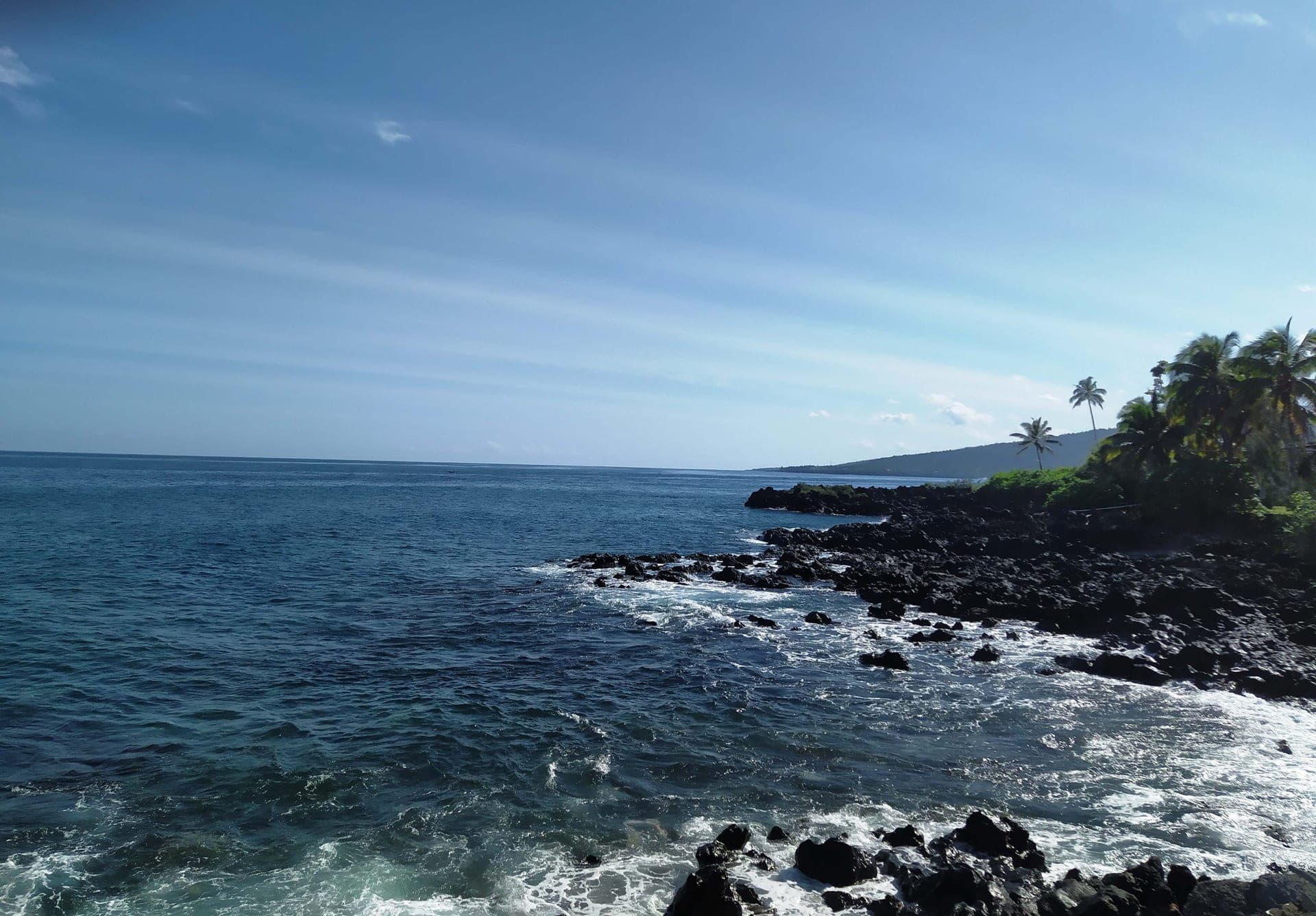
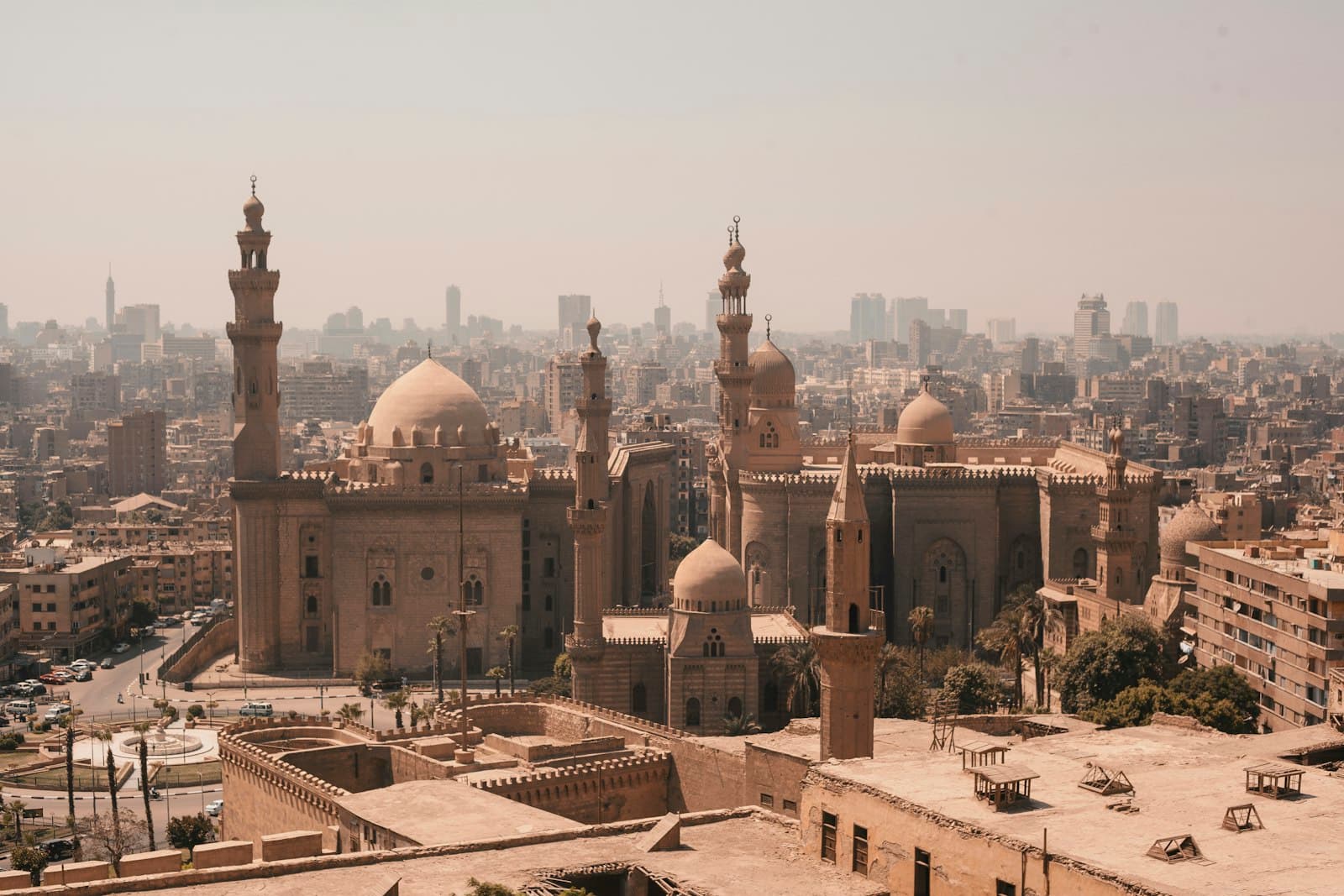
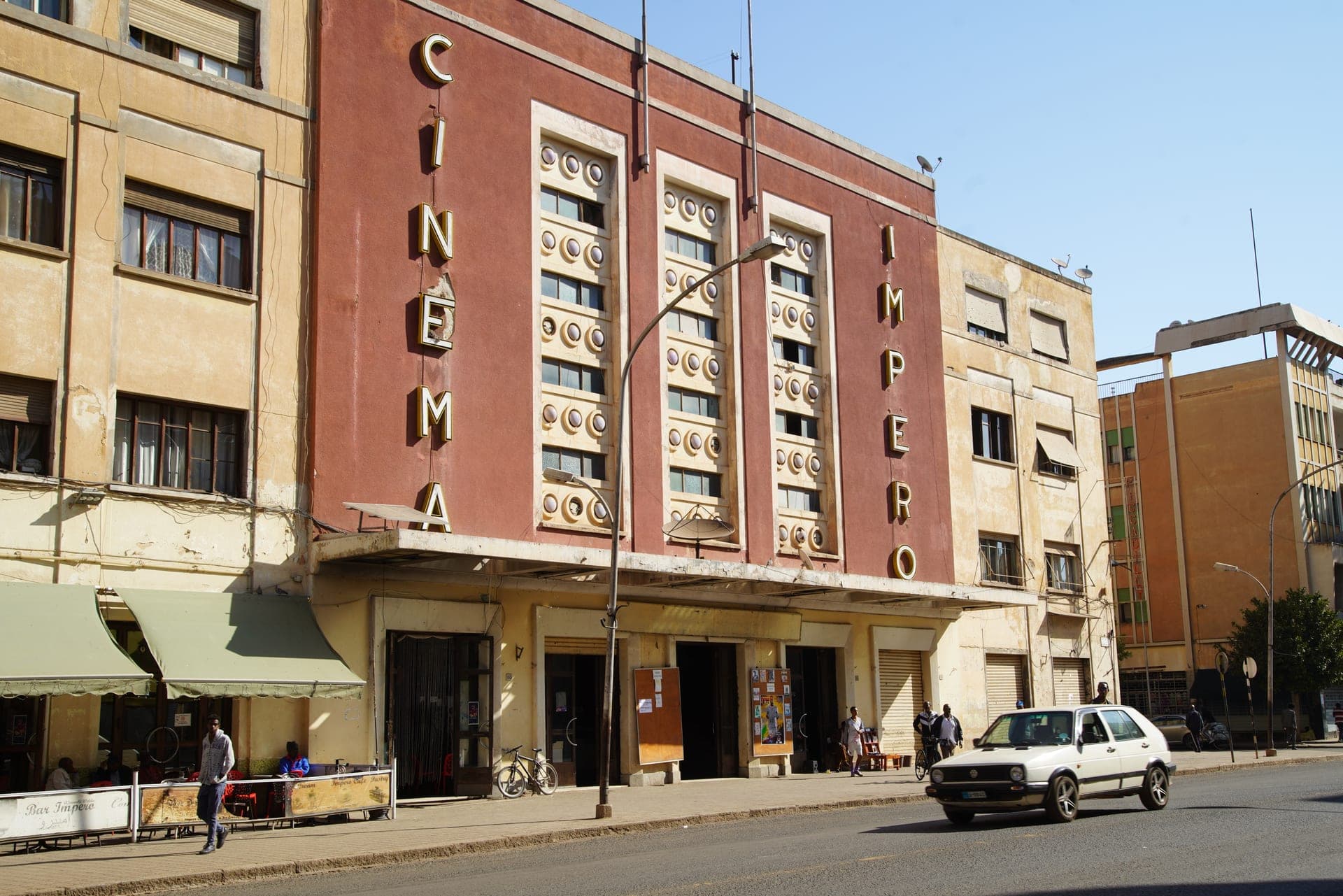
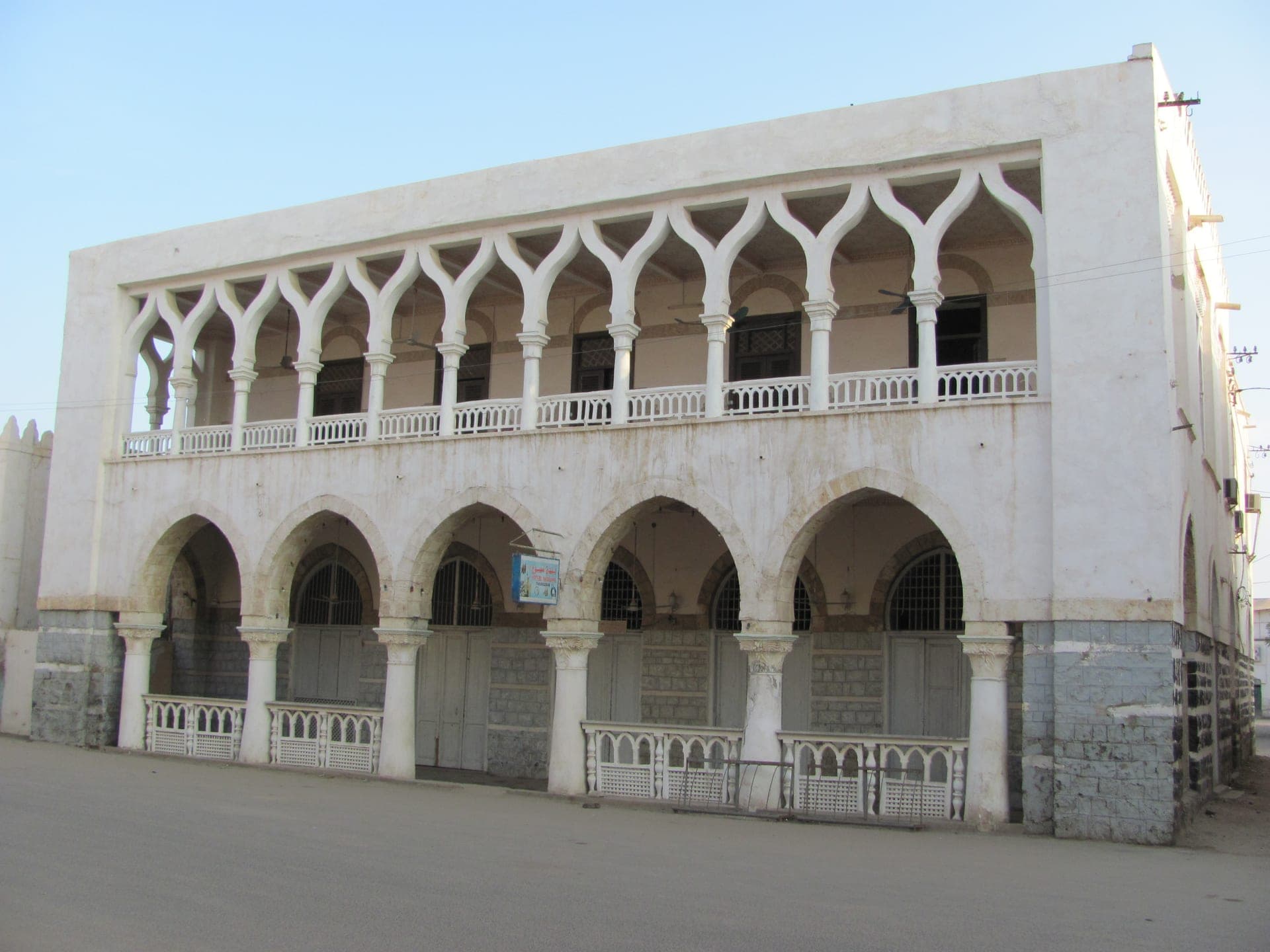
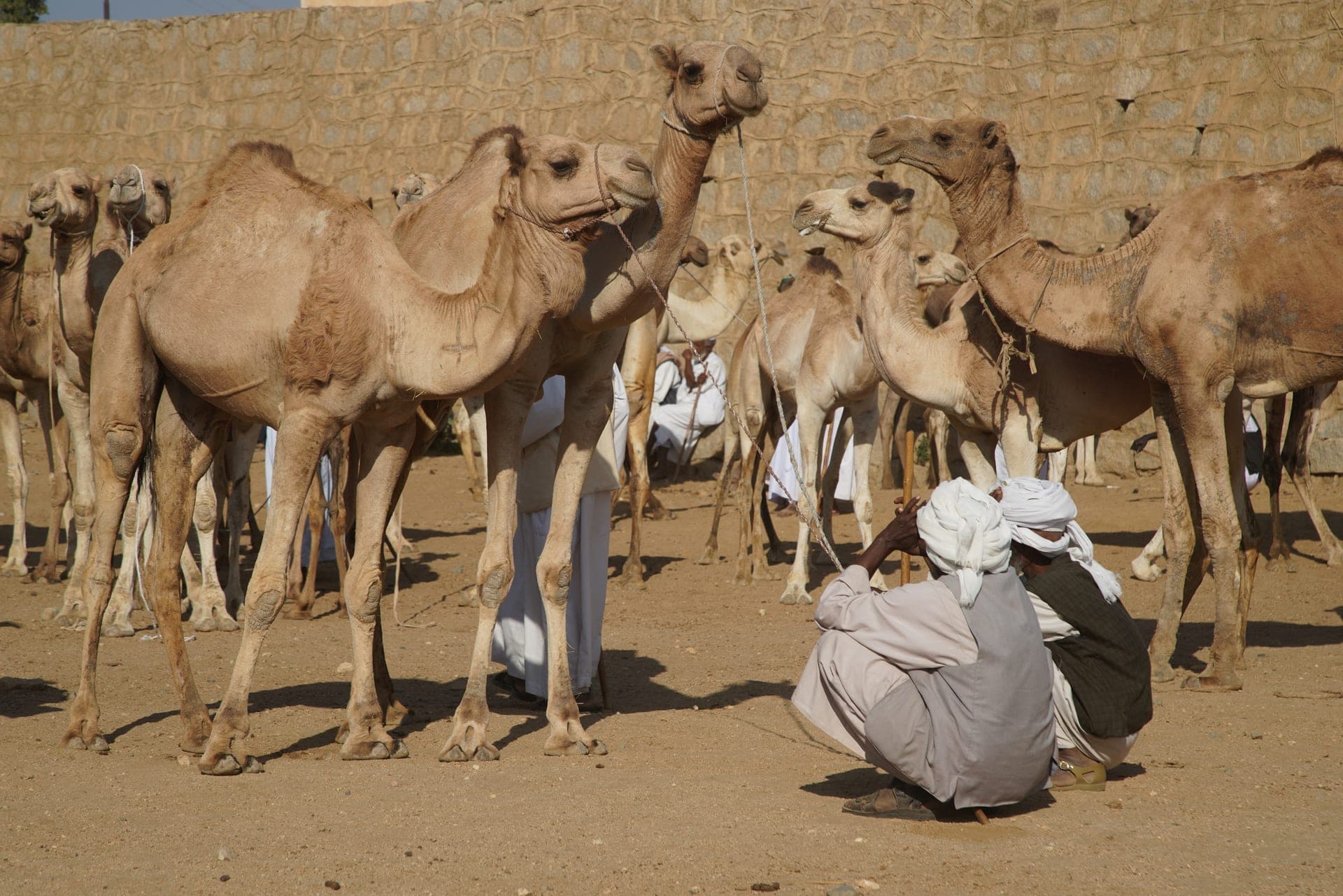
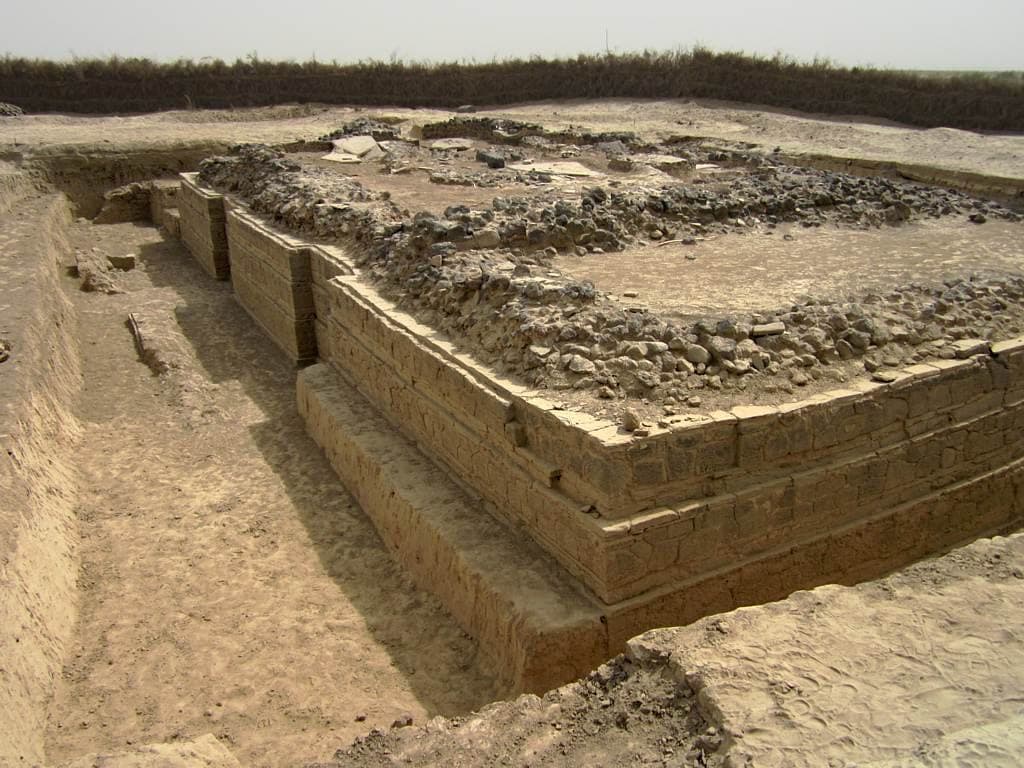
Asmara sits at 2,325 metres, the world's sixth-highest capital city and Africa's second-highest, and in July 2017 UNESCO inscribed it in its entirety as 'Asmara: A Modernist African City' — the first modernist city ever listed as a whole. More than 4,300 surveyed buildings from the 1930s Italian colonial period make it the largest collection of Italian Art Deco, Futurist and Rationalist architecture anywhere outside Italy, anchored by landmarks like the Fiat Tagliero Building, a 1938 Futurist former petrol station whose engineer, Giuseppe Pettazzi, designed 30-metre concrete wings cantilevered out with no visible support, and the 1937 Cinema Impero, one of the era's celebrated Art Deco cinemas. On the Red Sea coast, Massawa's Old Town blends Ottoman, Egyptian and Italian colonial coral-block architecture from centuries as a key Red Sea trading port; the town was heavily bombed during Ethiopia's February 1990 assault to retake it during Eritrea's independence war, and while restoration has progressed steadily since 1991, damage from that siege is still visible in parts of the old quarter today. Inland, Keren, Eritrea's second-largest city, is known for its traditional camel market on the old Massawa-to-Sudan trade route and for the Battle of Keren, a major 1941 East African Campaign engagement in which British Commonwealth, Sudanese, Indian and Free French forces broke Italian colonial defenses, opening the road to Asmara and Massawa. Further south, the ancient port ruins of Adulis trace roughly two thousand years of continuous trade, peaking in the 4th to 7th centuries AD as the principal Red Sea gateway of the Aksumite Empire, connecting the Horn of Africa to Rome, Byzantium, Egypt and India; excavations dating back to 1907 have uncovered church and temple pillars in deep, stratified layers. Nearby, the Matara archaeological park preserves more than a thousand years of continuous habitation across two successive ancient cities, its uppermost layers dating to the Aksumite period between the 4th and 8th centuries AD. Offshore from Massawa, the 200-plus islands of the Dahlak Archipelago — reachable by boat — offer clear, warm Red Sea diving among healthy coral reefs, reef sharks, manta rays and dugongs, alongside pearl-fishing history dating to Roman times, though none of the archipelago's individual islands appear among this page's five featured destinations.
Eritrea has been governed by President Isaias Afwerki since independence in 1993, without a single national election ever having been held and without the country's 1997 constitution ever being fully implemented; Afwerki turned 80 in February 2026 and has given no indication of stepping down. National service, officially set at 18 months, is routinely extended indefinitely in practice — often for a decade or more — and the United Nations has characterized the system as amounting to forced labor; it remains the primary driver of Eritrea's substantial emigration. Relations with Ethiopia, which improved dramatically after a 2018 peace deal (Eritrean troops withdrew from Ethiopia's Tigray region in March 2021 under international pressure), have deteriorated sharply again more recently: as of 2026 reporting, Ethiopia accuses Eritrea of arming Fano rebel forces in Ethiopia's Amhara region, a development some analysts describe as a dangerous collapse in bilateral relations with real potential to destabilize the wider region, and the border relationship should be considered unsettled rather than resolved. The US State Department rates Eritrea Level 2 — Exercise Increased Caution overall — notably milder than most other countries in this batch — citing travel restrictions, limited consular assistance, landmines and the risk of wrongful detention, including of dual US-Eritrean nationals; travel to the Eritrea-Ethiopia border area specifically is flagged for reconsideration given potential armed conflict and unmarked minefields there.
A visa is required for most nationalities via Eritrean diplomatic missions (Kenyan and Ugandan citizens are visa-exempt), typically valid three months from issue for entry and, once in-country, for a further month, extendable through Immigration in Asmara. The more consequential restriction for visitors is a separate travel permit, required for any movement more than 25 kilometres outside Asmara, which applies to all foreigners without exception — even staff of the US Embassy — and is obtained from Ministry of Tourism offices in the capital; this makes Eritrea a country where the visa gets you in, but a second layer of bureaucracy governs what you can actually see. Eritrea's population is unusually uncertain for a country its size, since no national census has ever been conducted; recent estimates range from roughly 3.7 to 4 million depending on methodology, with older commonly cited figures running considerably higher — treat any single number as a rough estimate rather than an authoritative count. Climate varies sharply with elevation: highland Asmara is mild year-round, best visited October through March with daytime temperatures of 15-26°C (its main rains fall in July-August), while coastal Massawa is best avoided in summer, when temperatures routinely exceed 40°C and can reach the mid-40s; November through February is the most comfortable window on the coast.
Practical info.
Climate
Best time: Oct–Mar in highland Asmara (mild, 15-26°C); Nov–Feb on the coast at Massawa (avoid the 40°C+ summer heat).
Visa & entry
Advance visa required (most nationalities) plus a separate travel permit for anywhere beyond 25km of Asmara. A visa is required in advance from Eritrean diplomatic missions for most nationalities (Kenyan and Ugandan citizens are exempt), valid 3 months for entry and 1 month once in-country, extendable in Asmara. Separately, all foreign visitors — with no exceptions — need a travel permit from the Ministry of Tourism for any movement more than 25km outside Asmara; this permit system, not the visa itself, is the main practical constraint on independent travel. The US State Department rates Eritrea Level 2 — Exercise Increased Caution, citing travel restrictions, limited consular assistance and risk of wrongful detention.
Money
Nakfa (ERN). Mobile money is widely accepted; carry some cash for rural travel.
Safety & health
Anti-malarial cover for low-elevation regions; standard travel insurance recommended.
How is Eritrea measured?
Tourism is the story; data is the context. Health, population, economy and climate indicators across Eritrea — sourced from the World Bank, WHO and UNICEF.
See Eritrea in numbers