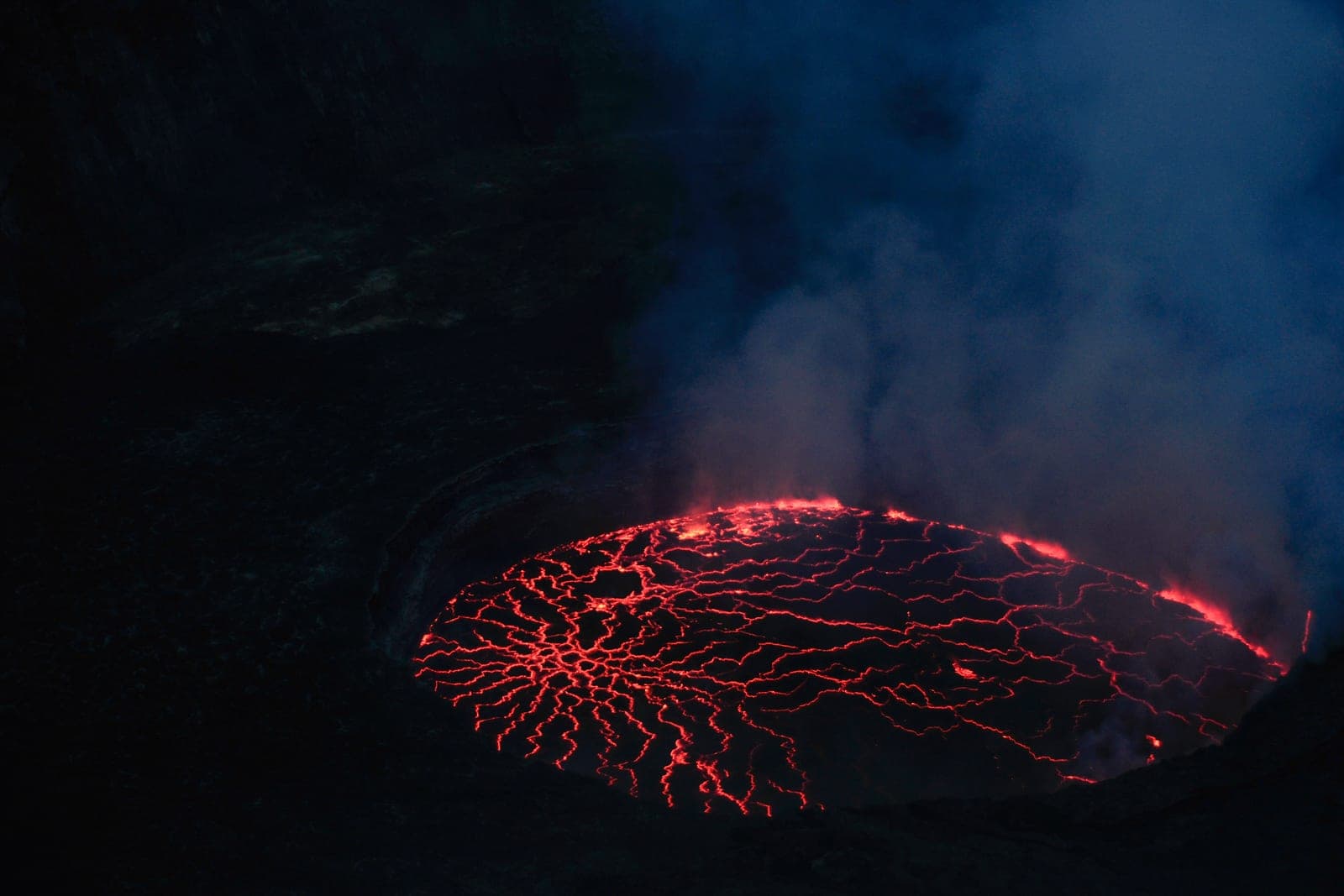
 Photo by Matti Barthel, CC BY 3.0, via Wikimedia Commons
DR CongoTourism
From Nyiragongo's lava lake above Goma to the Congo River — second only to the Amazon by discharge — the DR Congo is built at continental scale, Africa's second-largest country and home to Virunga, the oldest national park on the continent.
A country measured in horizons.
The DR Congo is the second-largest country in Africa by land area — 2.34 million square kilometres straddling the equator. The Congo River, the world's deepest, runs through the centre and drains a rainforest basin second only to the Amazon by area; its discharge to the Atlantic is the largest of any African river by a wide margin. To the east, the Albertine Rift lifts into the Virunga volcanic chain, where Mount Nyiragongo holds one of the few permanently active lava lakes on Earth above the town of Goma. The country contains five UNESCO natural world heritage sites — Virunga, Garamba, Kahuzi-Biéga, Salonga, and the Okapi Wildlife Reserve — the only African country with that many. Climate runs equatorial across most of the basin, with two wet seasons separated by drier windows; the eastern highlands run cooler and more seasonal.
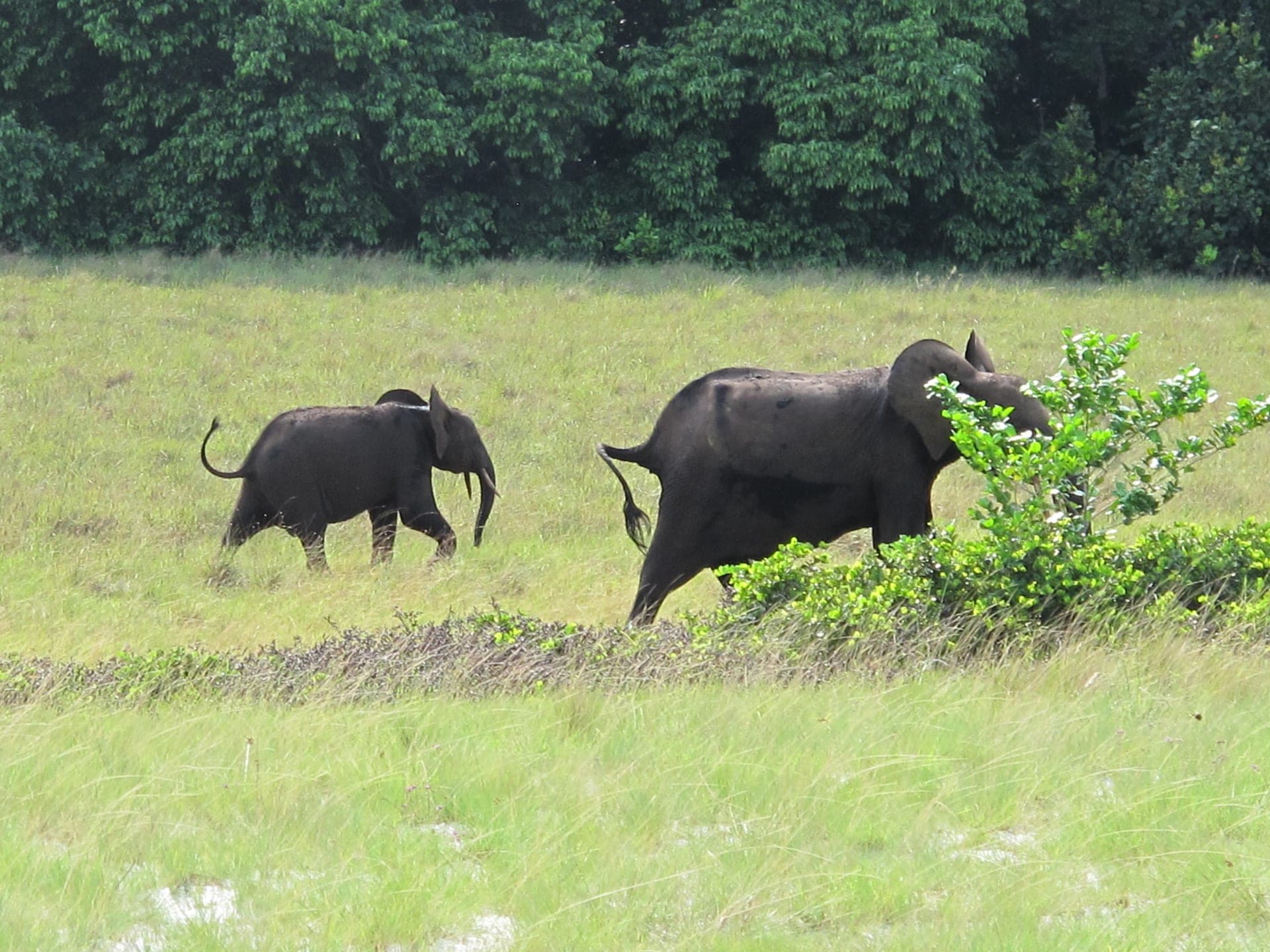
Virunga, founded in 1925 by Belgian King Albert I, was the first national park in Africa and remains the country's signature wildlife site. The DRC's parks shelter wildlife found almost nowhere else on the continent: eastern lowland (Grauer's) gorillas in Kahuzi-Biéga, bonobos endemic to Salonga, the Kordofan giraffe in Garamba, and the only mountain gorillas outside Rwanda and Uganda. The country carries a heavy historical weight alongside the wildlife — brutal Belgian colonial extraction under Leopold II, three decades of Mobutu rule, two Congo Wars (1996–2003), and chronic insecurity in the eastern provinces of North and South Kivu that has continued through 2026. The rangers of Virunga have lost more than two hundred staff to armed groups since the conflict began. The culture sits above the politics: Congolese rumba was inscribed on UNESCO's Intangible Cultural Heritage list in 2021 — jointly with the Republic of Congo — and Kinshasa is one of the largest francophone cities in the world.
This is not a country to visit casually. As of 2026, Virunga National Park has been closed to tourists since March 2020 owing to insurgent activity in North Kivu; the US State Department rates the country at Level 3 (Reconsider Travel) overall, and Level 4 (Do Not Travel) for the Kivu provinces where the M23 group currently holds Goma and Bukavu. Active tourism is largely Kinshasa-based — international flights land at N'djili Airport — and specialist expedition operators arrange bonobo tracking in Salonga National Park and lower-Congo river itineraries. The eVisa for a one-month single entry costs USD 100, requires a yellow fever certificate, a notarised letter of invitation, and a declared sponsor inside the country. Before the 2020 closure, the Nyiragongo summit climb was USD 300 and the Virunga gorilla permit USD 400 — the cheapest in the region; when the park reopens, the DRC reclaims a tourism story no other African country can match.
Practical info.
Climate
Best time: June–September and December–February (drier windows; most eastern parks currently closed to tourism).
Visa & entry
eVisa required for most nationalities; visa-exempt for some neighbouring states. DRC embassy schedule: one-month single entry USD 100, six-month multi-entry USD 450. Yellow fever certificate, notarised letter of invitation, and a declared in-country sponsor required. US/UK advisories at Level 3 (Reconsider Travel) overall, Level 4 (Do Not Travel) for North and South Kivu.
Money
Congolese franc (CDF). Mobile money is widely accepted; carry some cash for rural travel.
Safety & health
Anti-malarial cover for low-elevation regions; standard travel insurance recommended.
How is DR Congo measured?
Tourism is the story; data is the context. Health, population, economy and climate indicators across DR Congo — sourced from the World Bank, WHO and UNICEF.
See DR Congo in numbers