BotswanaTourism
Botswana made an unusual policy choice in the 1990s: low-volume, high-cost tourism. The result is some of the most uncrowded safari country on the continent — the Okavango Delta's water-channels and the Chobe River's elephant herds, accessible mostly by mokoro canoe, four-wheel-drive, or small plane.
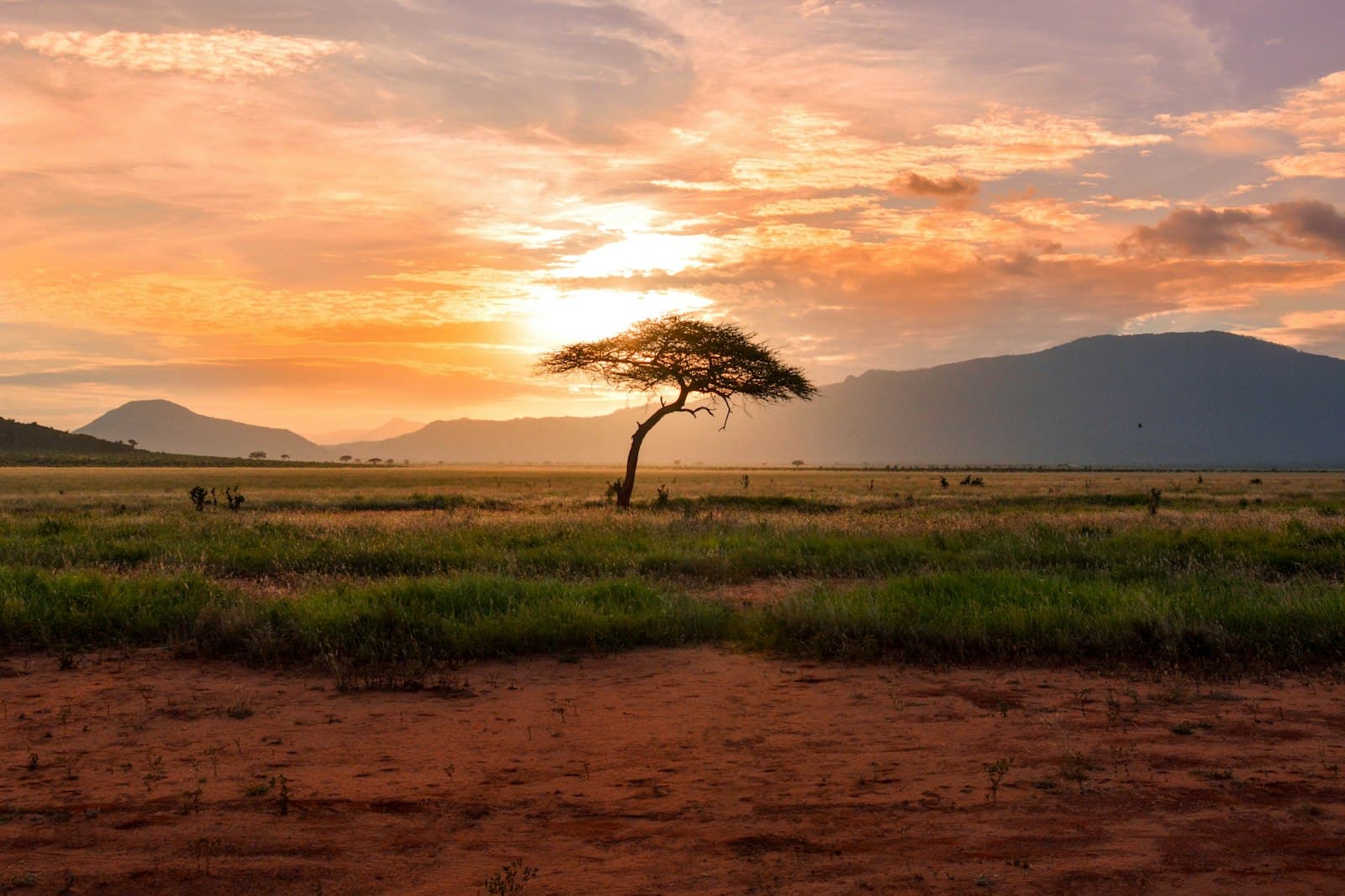
A country measured in horizons.
Botswana's signature is the Okavango Delta — the world's largest inland delta, where the Okavango River drains into the Kalahari Desert and never reaches the sea. The flood arrives from the Angolan highlands every June and turns 15,000 km² of Kalahari into a maze of lily-strewn channels and palm-fringed islands. Wildlife concentrates here as the surrounding desert dries: elephants in herds of hundreds, lions, leopards, hippos, and the highest density of African wild dog anywhere on the continent. Mokoro (dugout-canoe) tours pole through the channels; the camps themselves are mostly fly-in, with no road access.
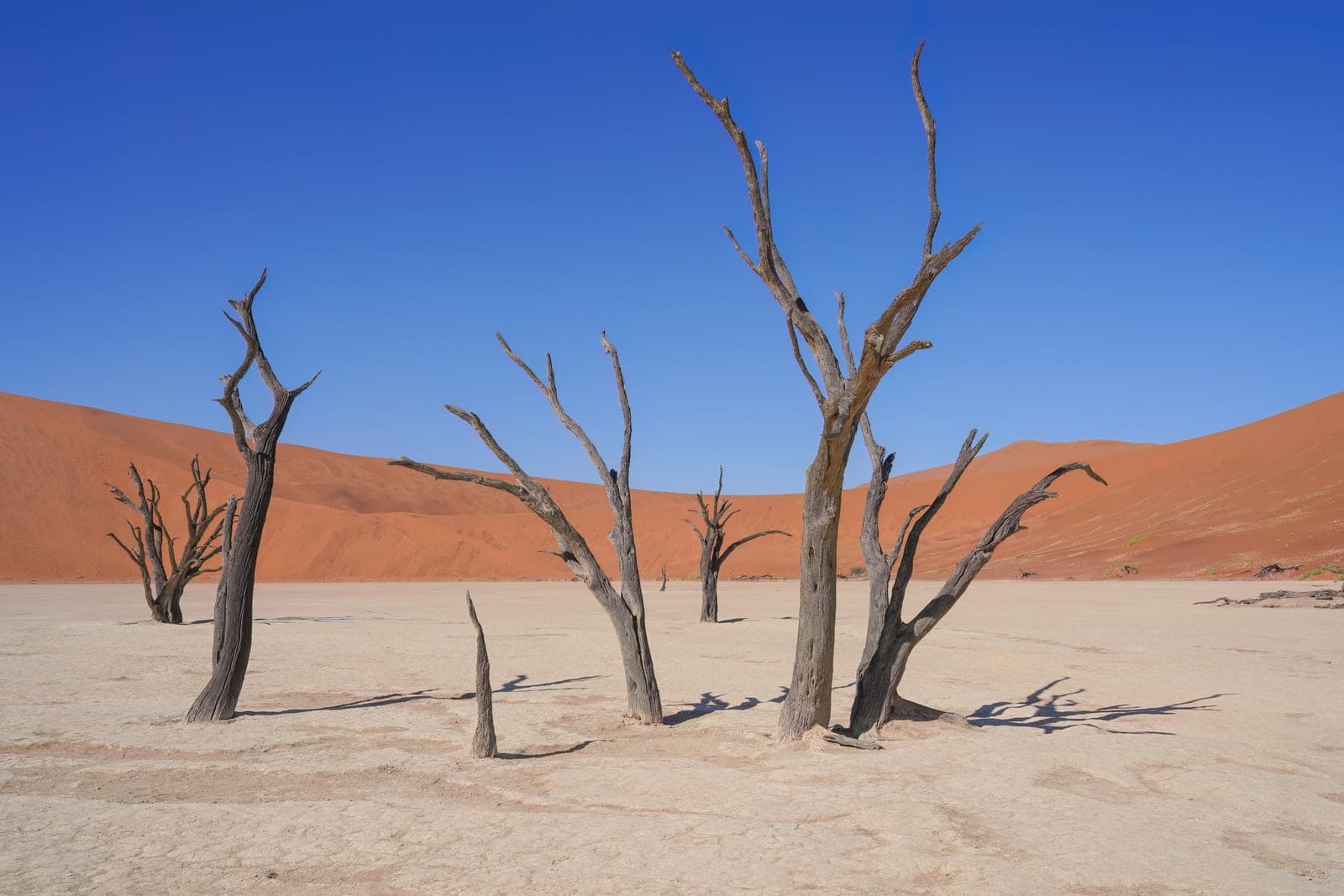
Beyond the Delta, the country opens into desert. Chobe National Park in the north holds Africa's largest elephant population — an estimated 130,000 animals, easily seen on the river drives that run from Kasane. The Makgadikgadi salt pans in the centre are the remains of an ancient super-lake; in the dry season they are flat enough to drive across at speed, and in February they hold flamingos in tens of thousands. The Central Kalahari Game Reserve is one of the largest protected areas on Earth, and the Tsodilo Hills hold over 4,500 prehistoric rock paintings.
Travel here is expensive by African standards — the country's tourism model is deliberately premium — but uniquely uncrowded for it. Camps in the Delta typically run USD 600–2,000 per person per night, all-inclusive of game drives and most flights. The dry season (May–October) is peak: the flood is in, the surrounding bush is sparse, and animals concentrate at water. Botswana is visa-free for most major nationalities for 90 days, including the US, UK, EU, Canada, and Australia. The peak month (September) sees the highest concentrations of wildlife but the highest camp prices to match.
Practical info.
Climate
Best time: May–October (dry season, peak wildlife concentration); September is the climax month.
Visa & entry
Visa-free for most major nationalities (90 days). Includes US, UK, EU, Canada, Australia. Check immigration.gov.bw for non-listed passports.
Money
Botswana pula (BWP). Mobile money is widely accepted; carry some cash for rural travel.
Safety & health
Anti-malarial cover for low-elevation regions; standard travel insurance recommended.
How is Botswana measured?
Tourism is the story; data is the context. Health, population, economy and climate indicators across Botswana — sourced from the World Bank, WHO and UNICEF.
See Botswana in numbers