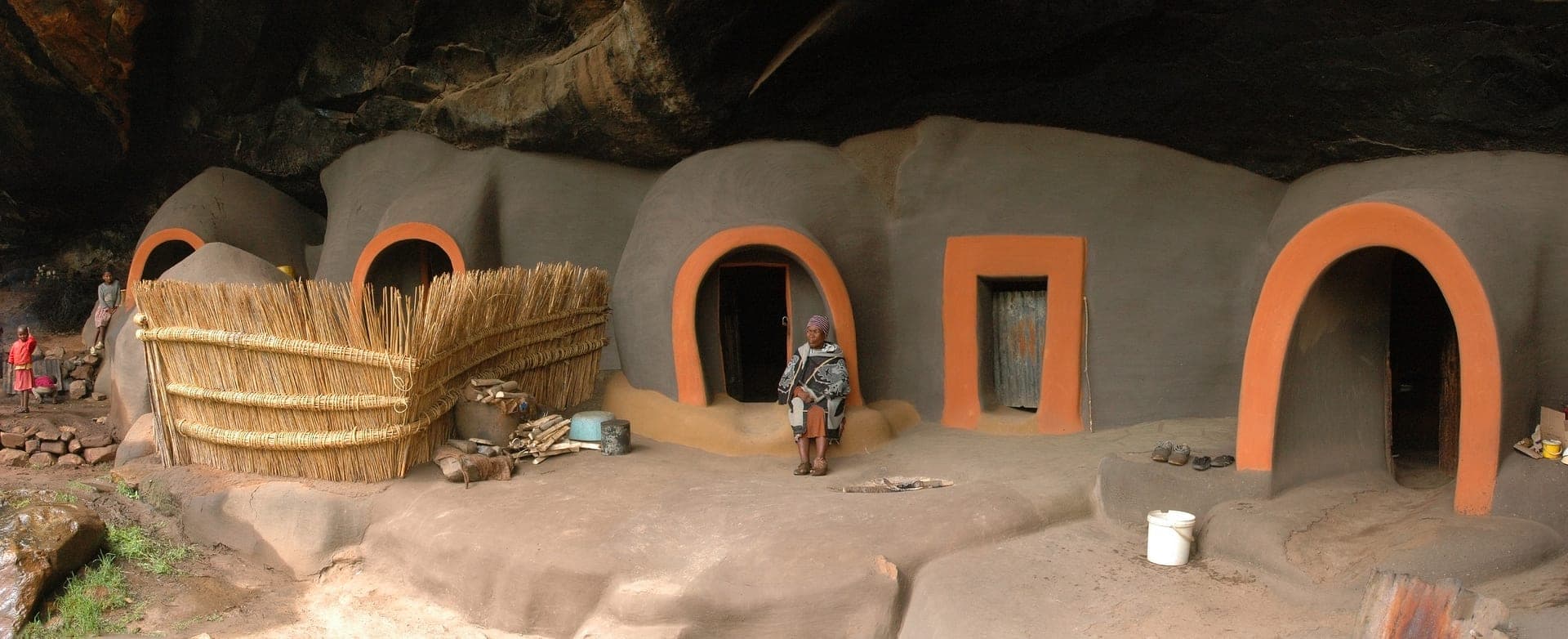
Photo by Dr. Alexey Yakovlev, CC BY-SA 2.0, via Wikimedia Commons
LesothoTourism
Lesotho is the only country on Earth lying entirely above 1,000 metres, a mountain kingdom enclosed on all sides by South Africa — earning its nickname 'the Kingdom in the Sky' from a landscape of basalt peaks, plunging waterfalls, and villages reached on horseback where the road ends.
A country measured in horizons.
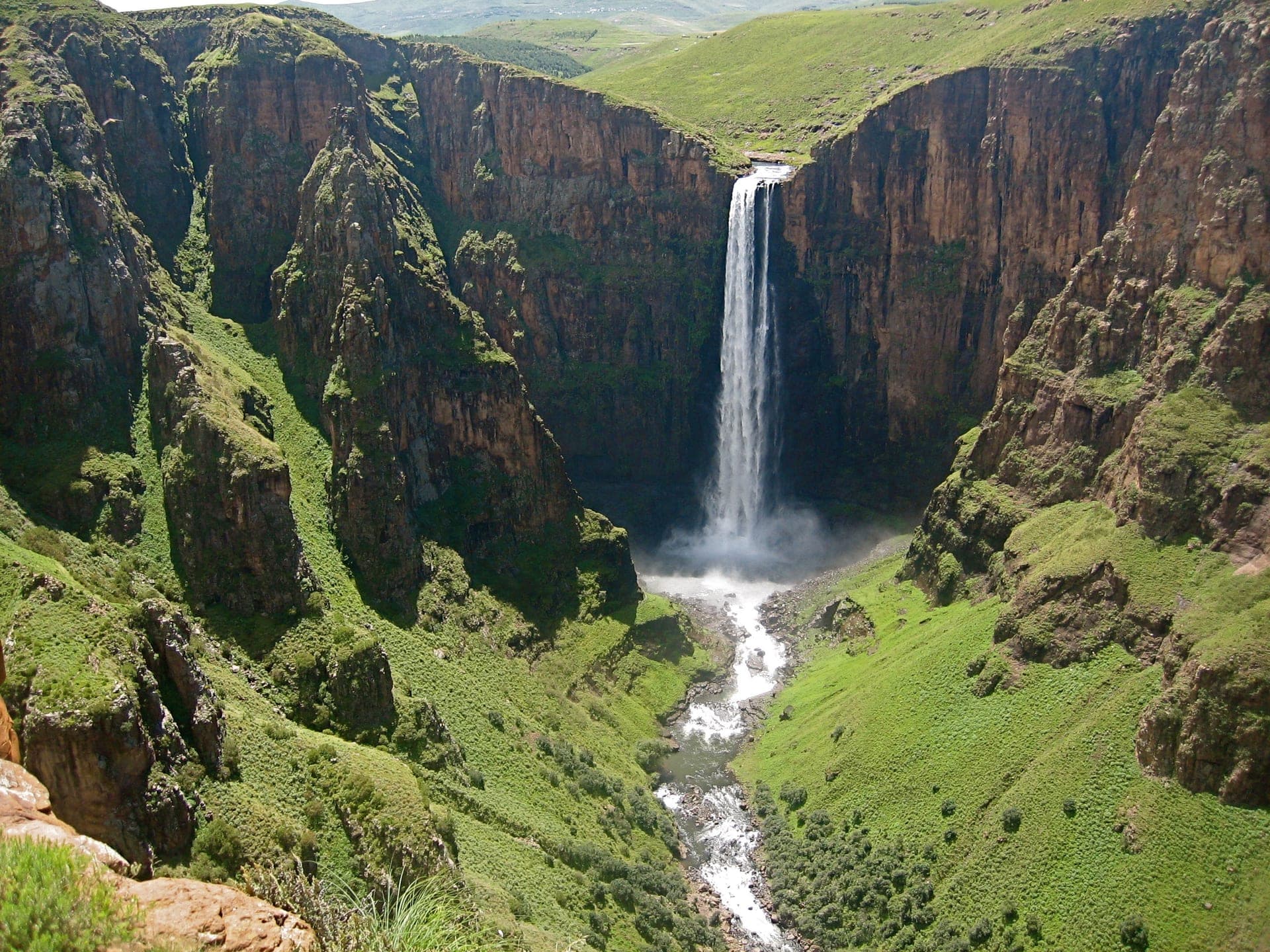
Lesotho's entire territory sits on the Maloti-Drakensberg range, and its lowest point (1,400 metres) is still higher than the highest point in most countries. Thabana Ntlenyana, at 3,482 metres, is the highest peak in Africa south of Kilimanjaro and Mount Kenya, and the surrounding highlands hold Maletsunyane Falls near Semonkong — a 192-metre single-drop waterfall, among the highest in southern Africa, and the site of the world's longest single-drop commercial abseil. Bokong Nature Reserve protects Afro-alpine grassland along the main highlands road, a habitat for the bearded vulture (lammergeier), while the sandstone overhangs of Ha Kome preserve a cluster of troglodyte cave dwellings still inhabited into the 20th century. Basotho ponies remain the standard transport across much of the rural highlands, where villages beyond the paved road network are reached only on horseback or on foot — a genuine, not staged, feature of highland travel rather than a tourist novelty.
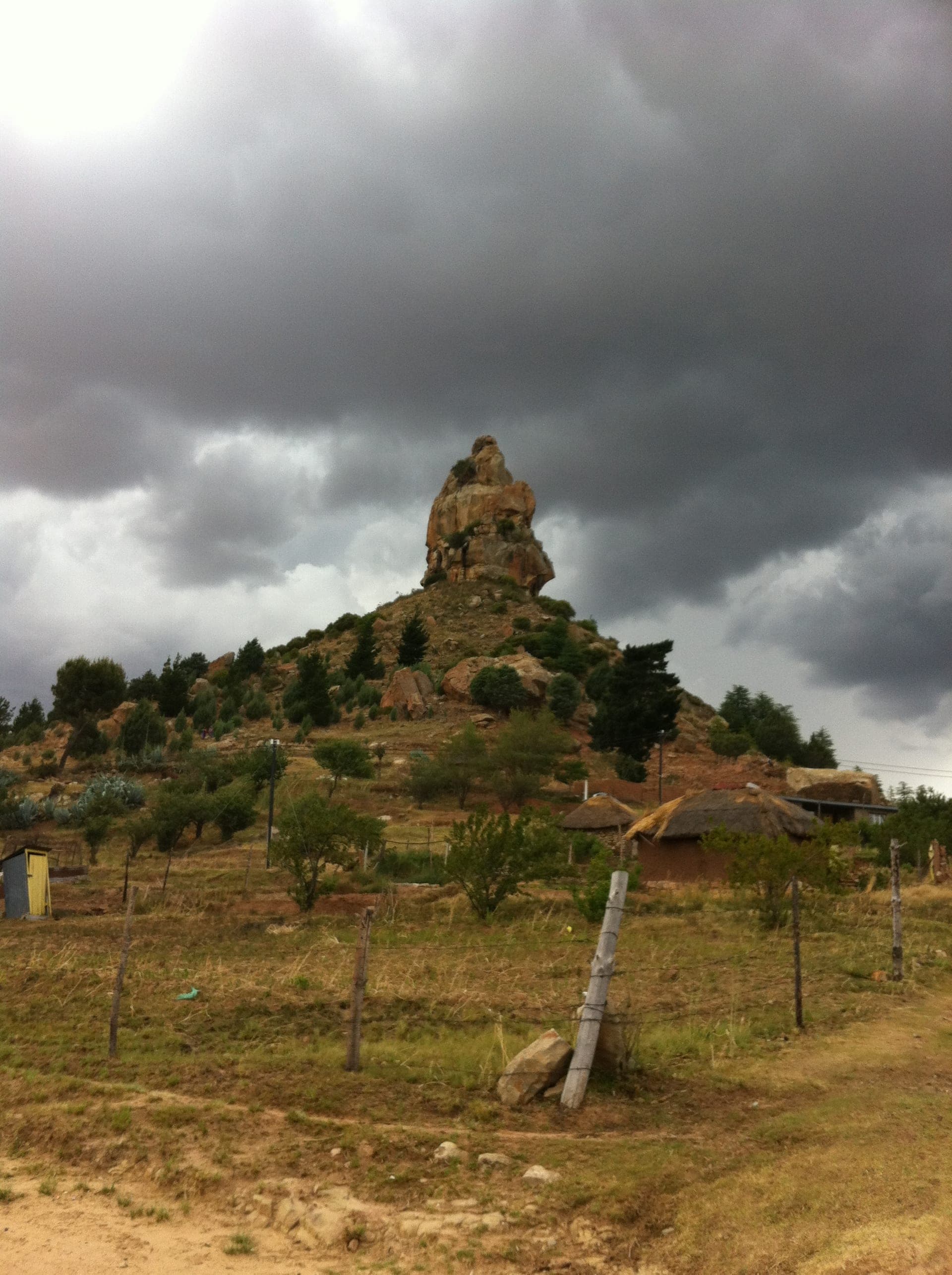
Lesotho's mountains made it a refuge during the difaqane wars of the early 19th century, when King Moshoeshoe I united fleeing clans and fortified Thaba Bosiu, the flat-topped sandstone mountain that repelled Zulu and Boer attacks and remains Lesotho's most important national monument and the burial site of its kings. It became the British protectorate of Basutoland in 1868 at Moshoeshoe's own request, precisely to avoid absorption into what became the Boer republics, and gained independence in 1966 as the only sub-Saharan African country to have been entirely enclosed by another single state at independence. Politics since has been turbulent — coups, army mutinies, and a 1998 SADC military intervention after a disputed election — but has stabilised into a functioning multiparty coalition system; Prime Minister Sam Matekane, a mining-and-construction magnate elected in October 2022, has led a coalition government since, surviving a 2023 no-confidence motion, though a package of constitutional reforms (the 'Omnibus Bill') remains stalled amid ongoing disputes among coalition partners.
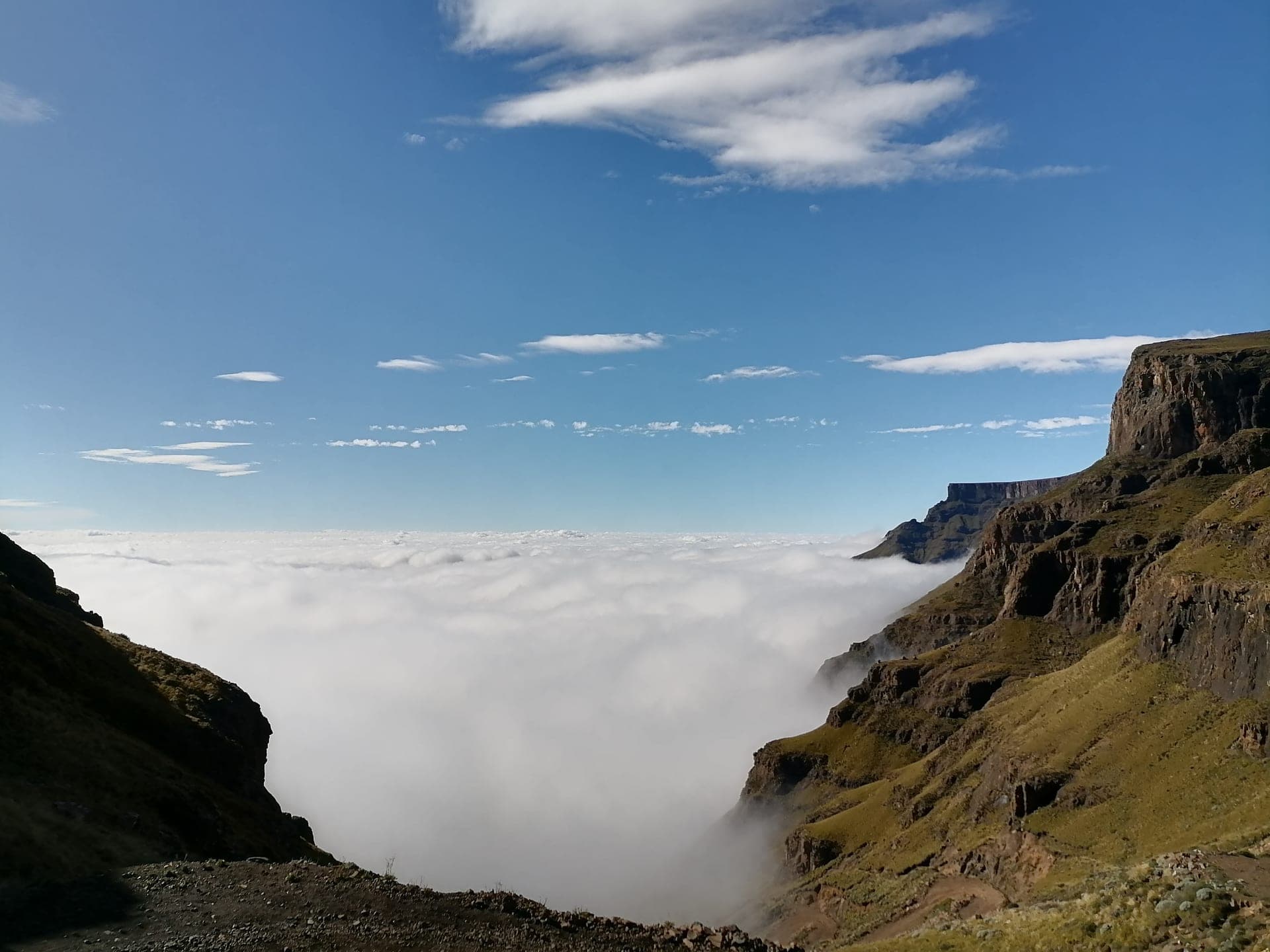
Most visitors enter overland from South Africa; Maseru's Moshoeshoe I International Airport has limited regional connections, mainly via Johannesburg. Lesotho is visa-free for citizens of around 103 countries, including the US (up to 14 days) and most of the EU and Commonwealth; nationals of roughly 39 other countries need a visa in advance from a Lesotho mission, though an eVisa system introduced in 2017 allows online applications for tourism, business, and other visa types (single-entry validity up to 44 days, multiple-entry up to 180). The Katse and Mohale dams of the Lesotho Highlands Water Project, which exports water to South Africa's Gauteng region, are also open to visitors and represent one of the largest civil-engineering projects in Africa. Summers (November–March) bring warm days and afternoon thunderstorms; winters (June–August) are cold and can bring snow to the highlands, closing some mountain passes — check road conditions before driving the Sani Pass or other high routes.
Practical info.
Climate
Best time: Oct–Apr (warm, best for hiking and pony trekking); Jun–Aug winter brings snow and can close mountain passes.
Visa & entry
Visa-free for ~103 nationalities (US 14 days, most EU/Commonwealth); eVisa available for others. Citizens of around 103 countries can enter Lesotho visa-free (US citizens for up to 14 days); nationals of roughly 39 other countries need a visa, obtainable through Lesotho's eVisa system (introduced 2017) or a Lesotho mission abroad — single-entry eVisas run up to 44 days, multiple-entry up to 180 days. Passport must be valid 6+ months with proof of onward travel. Winter (Jun–Aug) can bring snow that closes high mountain passes including parts of the Sani Pass route; check conditions before driving.
Money
Lesotho loti (LSL, pegged 1:1 to the South African rand; rand also accepted). Mobile money is widely accepted; carry some cash for rural travel.
Safety & health
Anti-malarial cover for low-elevation regions; standard travel insurance recommended.
How is Lesotho measured?
Tourism is the story; data is the context. Health, population, economy and climate indicators across Lesotho — sourced from the World Bank, WHO and UNICEF.
See Lesotho in numbers