 Photo by Bernard Gagnon, CC BY-SA 4.0, via Wikimedia Commons
EswatiniTourism
Landlocked between South Africa and Mozambique, Eswatini packs granite domes, wildlife reserves, and Africa's last absolute monarchy into a country smaller than New Jersey — small enough that Big Five game country, Sibebe Rock, and the royal valley of Ezulwini are all under two hours' drive apart.
A country measured in horizons.
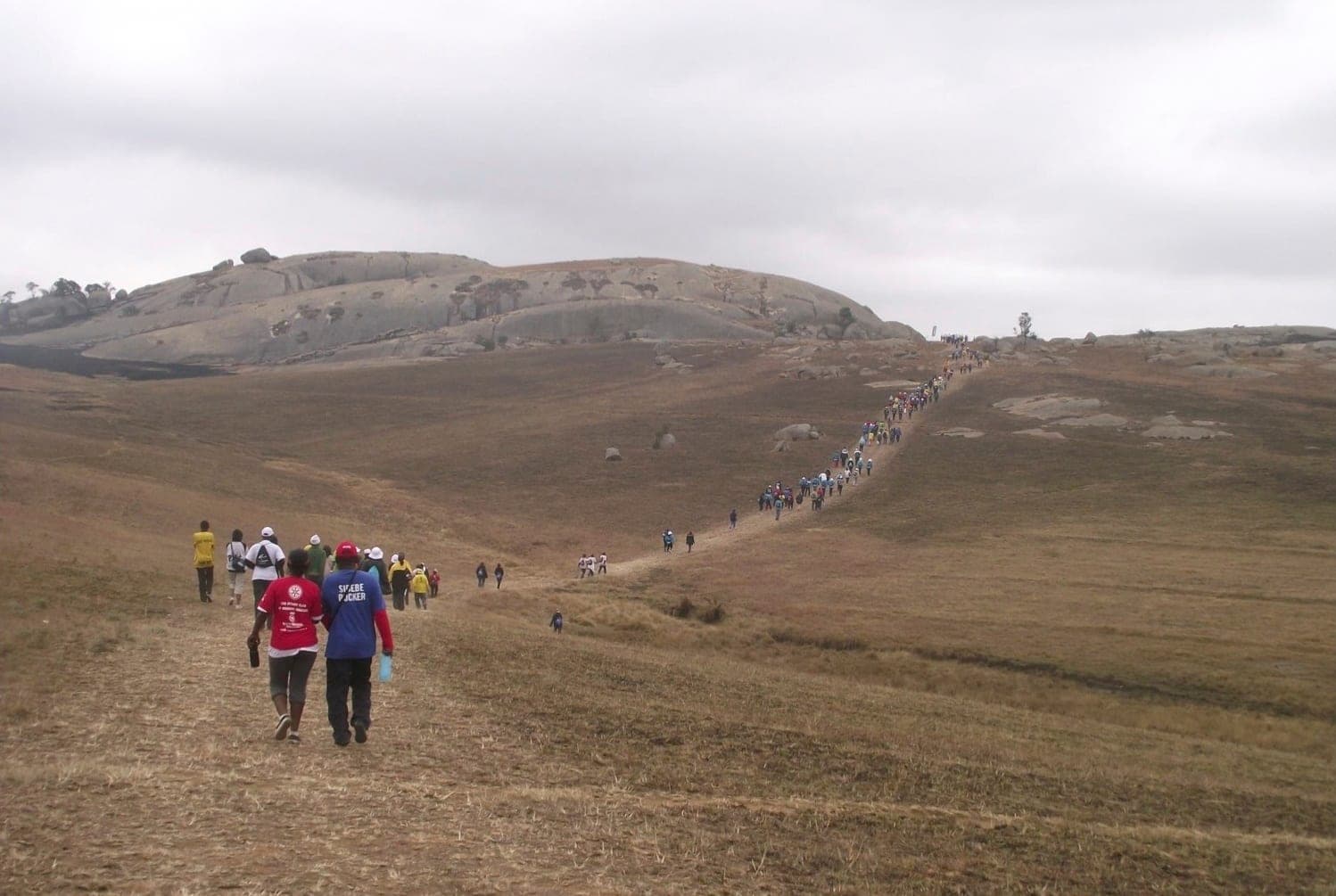
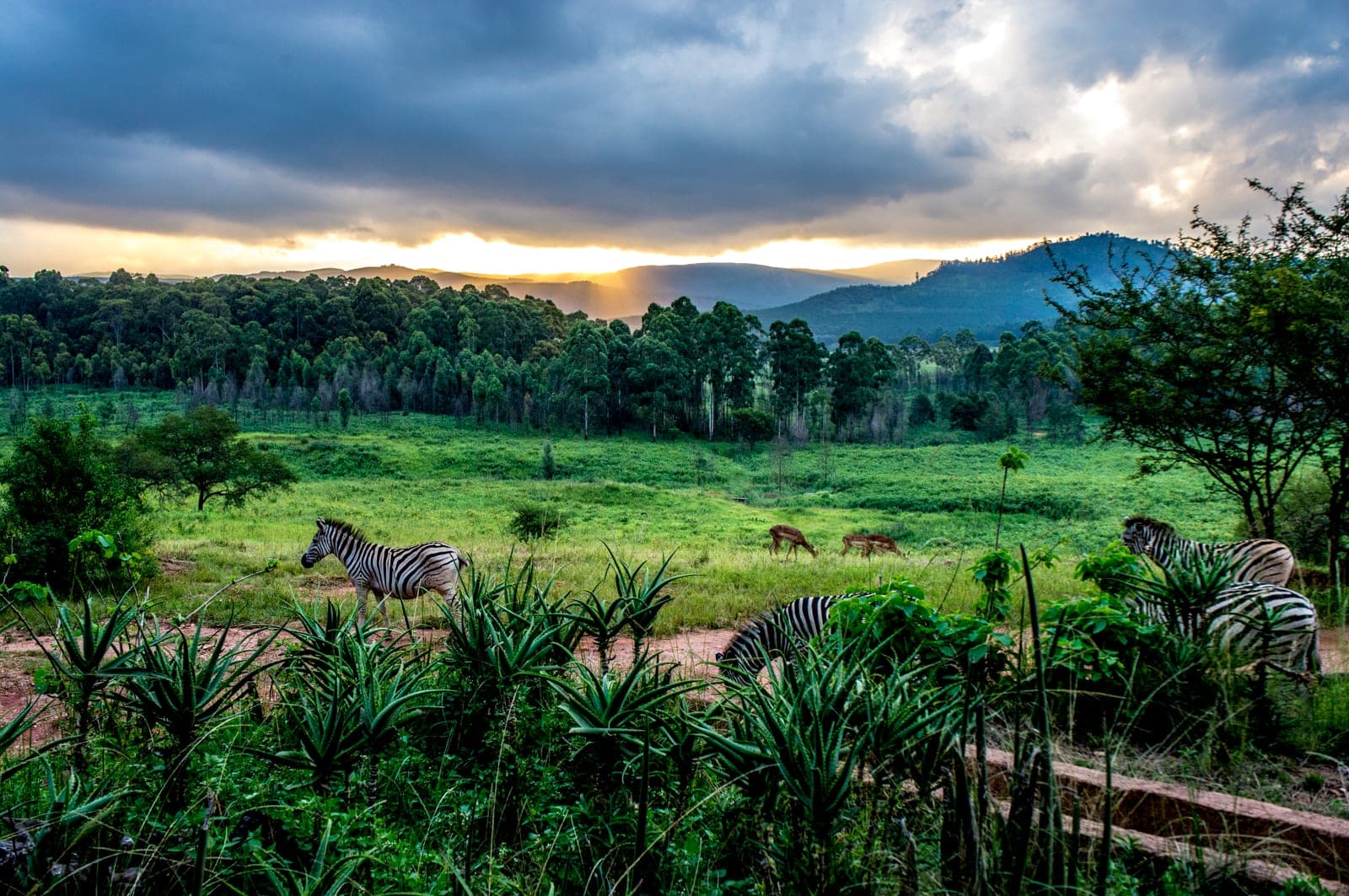
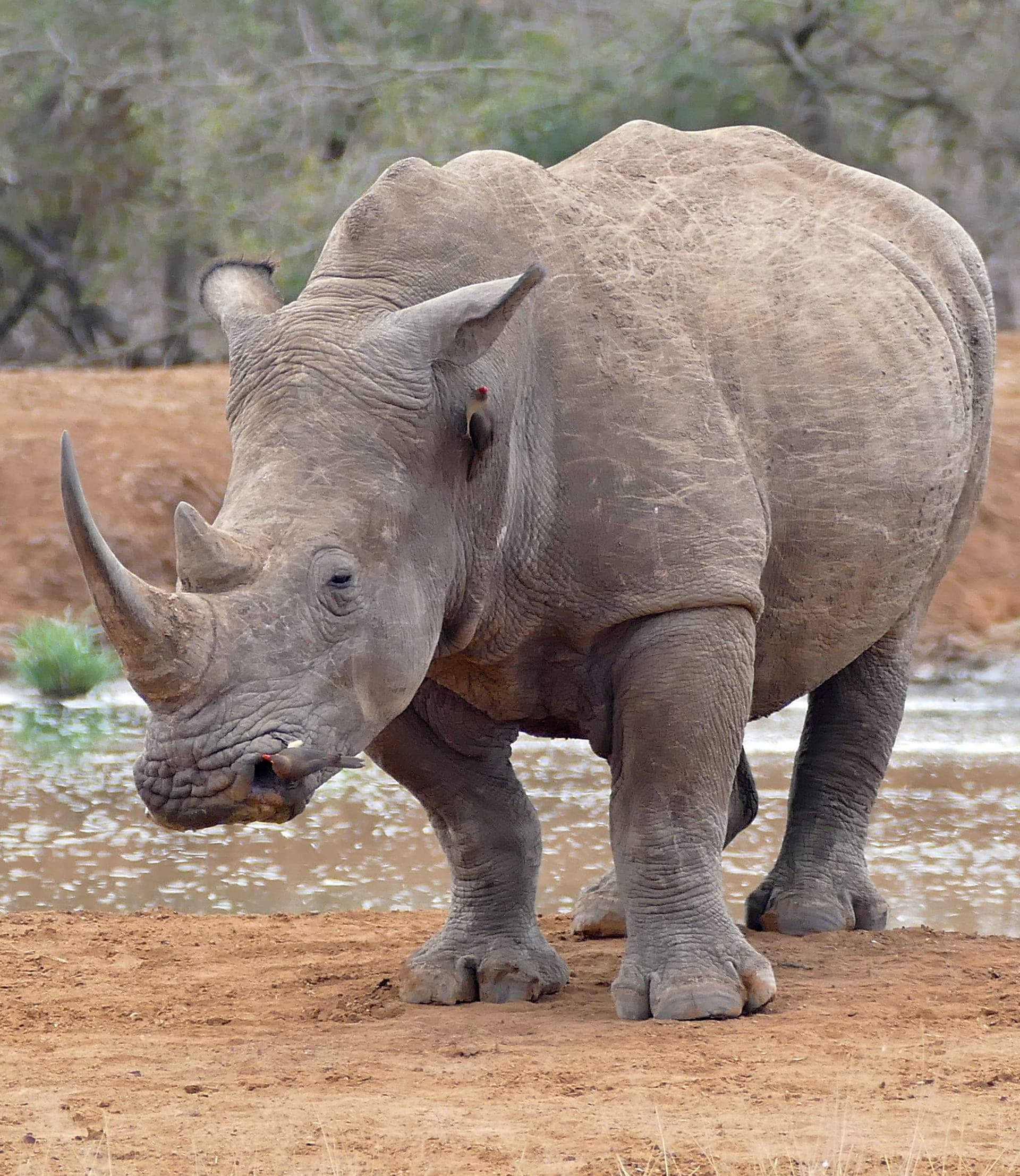
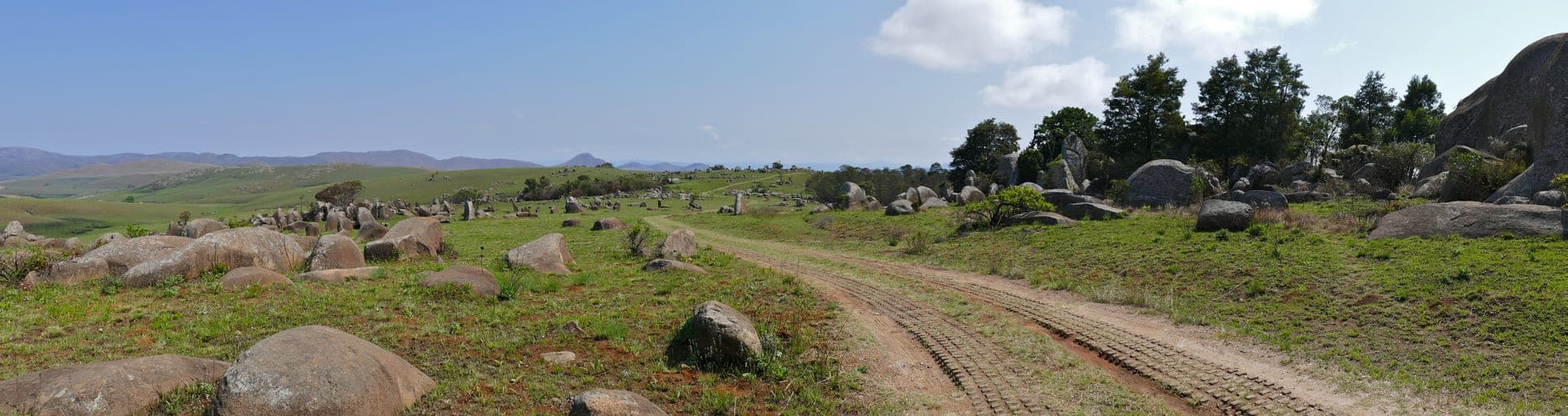
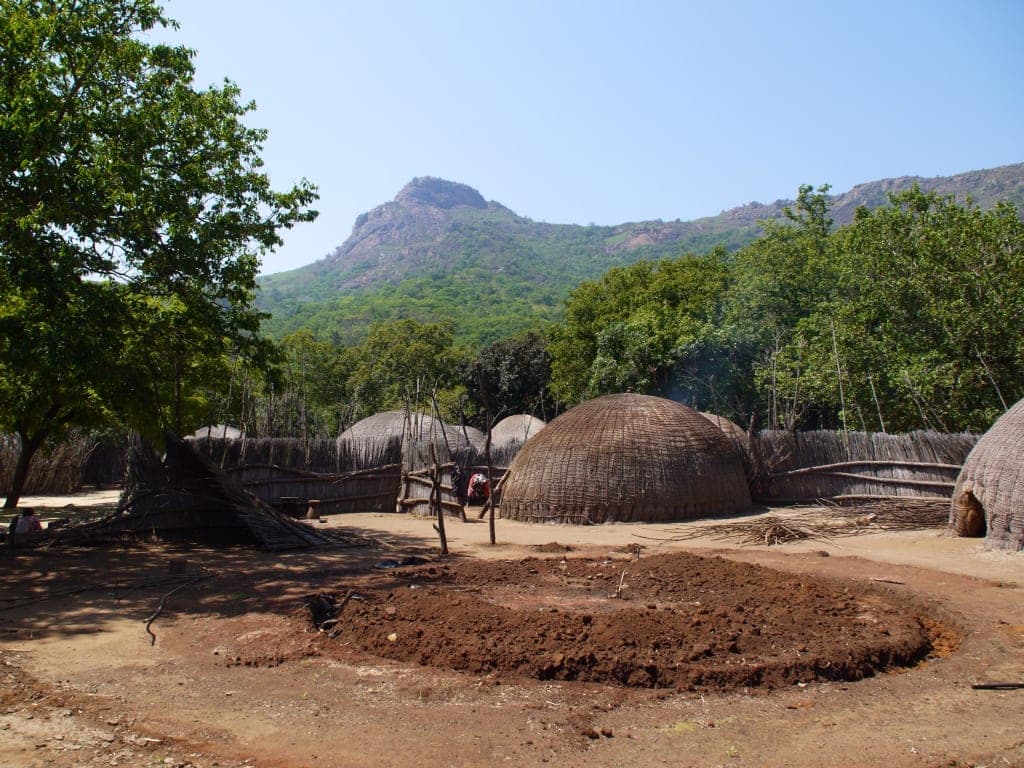
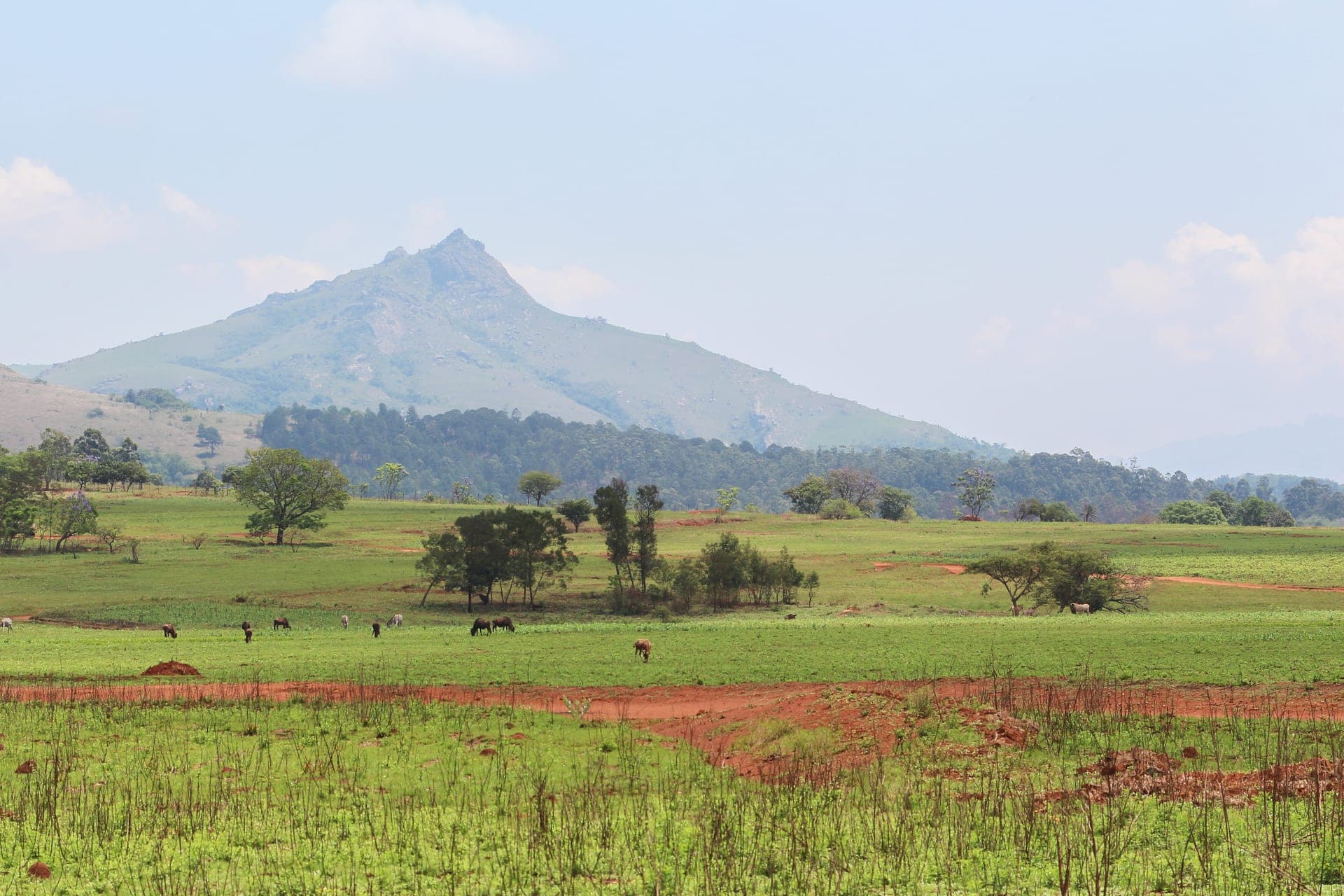
Eswatini's landscape rises from the low, hot bushveld along the Mozambique border to a cool, forested highveld along the South African escarpment, with Sibebe Rock near Mbabane — a granite monolith often cited as the world's second-largest after Australia's Uluru — dominating the middle ground. That compactness makes Eswatini one of the easiest wildlife countries in the region to see in a short visit: Mlilwane Wildlife Sanctuary, the country's oldest protected area, allows walking and cycling among zebra and antelope with no dangerous predators; Mkhaya Game Reserve, by contrast, specialises in rhino conservation and black-rhino tracking on foot with an armed ranger; and Hlane Royal National Park holds lion and elephant on former royal hunting grounds. Malolotja Nature Reserve in the northwest protects Afromontane grassland cut by waterfalls and a canopy tour, and the Ngwenya mine nearby is among the oldest known mine workings in the world, with haematite extraction dated to around 43,000 years ago.
Eswatini is Africa's last absolute monarchy: King Mswati III, who acceded to the throne in 1986, holds direct authority over the executive, legislature (whose members he substantially appoints), and judiciary, and marked his Ruby Jubilee — 40 years since acceding as heir apparent — with ceremonies at Somhlolo National Stadium in April 2026. Political parties remain banned from contesting elections under the tinkhundla system, and pro-democracy protests calling for multiparty reform, which erupted in 2021 and recurred in following years, have periodically been met with force by security services, particularly in Mbabane and Manzini. None of this affects the standard tourist circuit of game reserves and the Ezulwini Valley, but travelers should expect an occasional civil-unrest advisory and avoid demonstrations if encountered. Swazi cultural traditions remain prominent and visible to visitors, notably the annual Umhlanga reed dance and the Incwala kingship ceremony, both held in the royal precinct at Lobamba.
Most visitors arrive by road from South Africa (Johannesburg is a roughly 4-hour drive to Mbabane) or fly into King Mswati III International Airport near Manzini, which has direct links to Johannesburg. Eswatini is visa-free for around 98 nationalities including the US, UK, EU, and most Commonwealth countries, for stays of up to 30 days, extendable once at the Ministry of Home Affairs; other nationalities must arrange a visa in advance through an Eswatini mission abroad, as visas are not issued on arrival. The dry winter months of May to September are cooler, clearer, and best for game viewing as vegetation thins and animals cluster at waterholes; the wet summer from November to March brings lush green highlands but hazier wildlife sightings.
Practical info.
Climate
Best time: May–September (dry winter; best game viewing, cool and clear); Nov–Mar wet summer is lush but hazier.
Visa & entry
Visa-free for ~98 nationalities (US, UK, EU, most Commonwealth) for up to 30 days. Eswatini is visa-free for citizens of roughly 98 countries for stays up to 30 days, extendable once at the Ministry of Home Affairs; stays beyond 60 days require a Temporary Residence Permit. Nationalities that do require a visa cannot obtain one on arrival and must apply in advance via an Eswatini mission abroad. Passport must be valid 3+ months beyond travel dates; yellow fever certificate required if arriving from an at-risk country. Exercise increased caution around occasional pro-democracy demonstrations in Mbabane/Manzini, which have drawn a forceful security response since 2021 — the standard game-reserve circuit is unaffected.
Money
Swazi lilangeni (SZL, pegged 1:1 to the South African rand). Mobile money is widely accepted; carry some cash for rural travel.
Safety & health
Anti-malarial cover for low-elevation regions; standard travel insurance recommended.
How is Eswatini measured?
Tourism is the story; data is the context. Health, population, economy and climate indicators across Eswatini — sourced from the World Bank, WHO and UNICEF.
See Eswatini in numbers