EgyptTourism
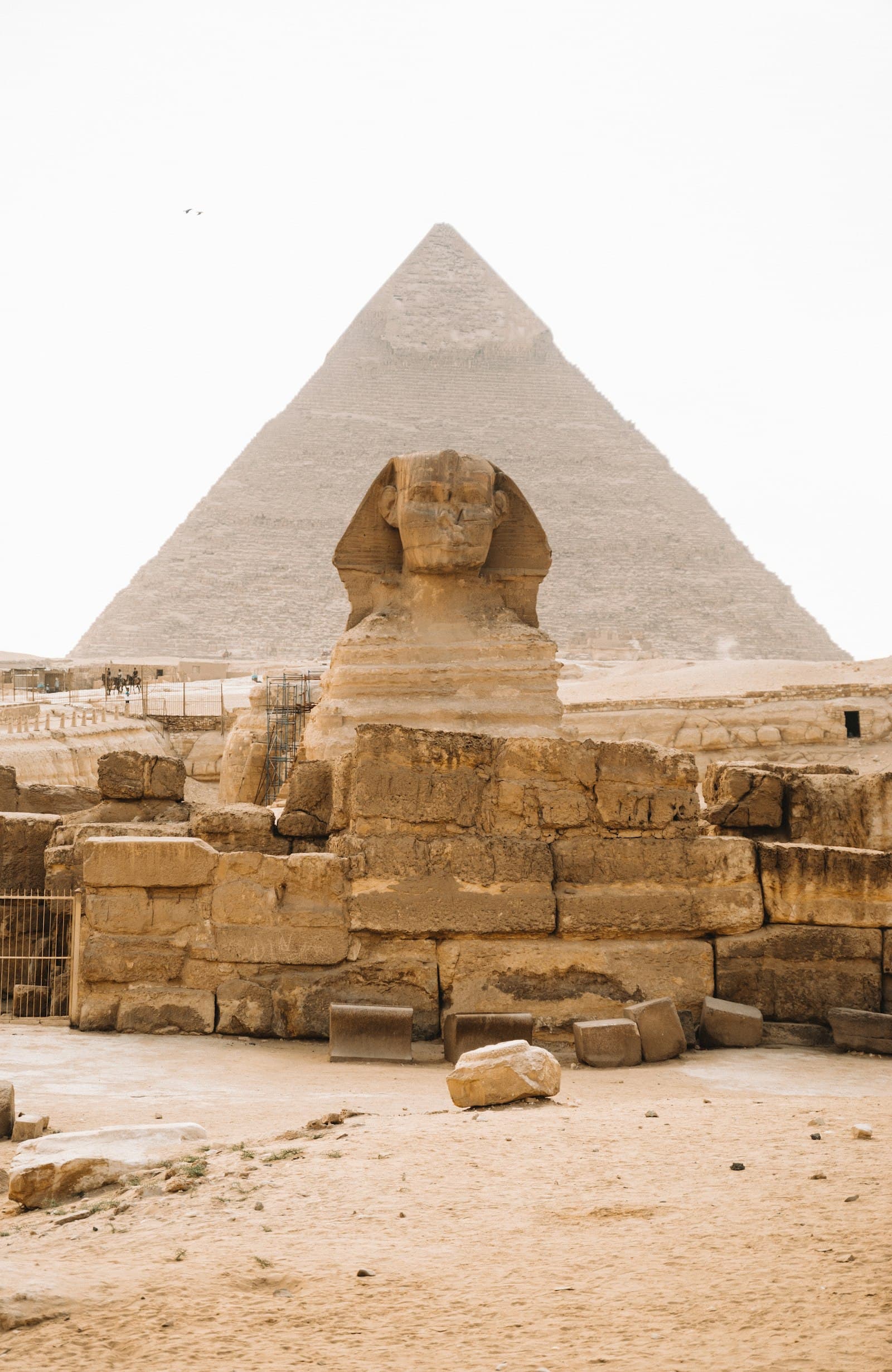
Egypt is the country every traveller draws on a map first — pyramids on the Giza plateau, the Nile threading 1,500 kilometres of green through the Sahara, Luxor's temples lit at night, and a Red Sea coast that swaps desert for coral within a single afternoon.
A country measured in horizons.
Egypt is the Nile, and almost everything else follows. Ninety-five percent of the country's population lives within a few kilometres of the river, on a thin green ribbon that splits the eastern and western Sahara. North to south, the river tracks five thousand years of civilisation: Cairo's Islamic and Coptic neighbourhoods sit on top of pharaonic Memphis; downriver, Saqqara's step pyramid is older than the Great Pyramid; further south at Luxor, the Karnak and Hatshepsut temples cluster against the Valley of the Kings on the west bank. Aswan's First Cataract historically marked Egypt's southern frontier.
Beyond the Nile, the country pivots on three more landscapes. The Mediterranean coast at Alexandria carries the legacy of Greek and Roman Egypt, including the lighthouse and library of antiquity. The Sinai Peninsula bridges Africa and Asia, with Mount Sinai's monastery of St Catherine and the diving reefs of Dahab and Sharm el-Sheikh. The Western Desert opens into the White Desert and the oases of Siwa, Bahariya, and Farafra, where Roman ruins sit in dunes that swallowed entire towns.
Travel here is well-trodden but still rewards effort. Cruise boats run Luxor–Aswan in three to four nights; the overnight train from Cairo arrives at sunrise. Cairo's metro is functional and air-conditioned. October through April is the practical season — Aswan and Luxor cool to walkable temperatures, and the coast stays warm enough for snorkelling. Summer (June–August) is brutal in Upper Egypt but kinder on the Mediterranean. Tickets to the Pyramids and Valley of the Kings now require advance booking online via the official ticket portal.
Practical info.
Climate
Best time: October–April (cool, walkable Luxor & Aswan); avoid June–August Upper Egypt heat.
Visa & entry
eVisa available; visa-on-arrival for many nationalities. Apply at visa2egypt.gov.eg or pay at port of entry. USD 25, single-entry, 30 days for most passports.
Money
Egyptian pound (EGP). Mobile money is widely accepted; carry some cash for rural travel.
Safety & health
Anti-malarial cover for low-elevation regions; standard travel insurance recommended.
How is Egypt measured?
Tourism is the story; data is the context. Health, population, economy and climate indicators across Egypt — sourced from the World Bank, WHO and UNICEF.
See Egypt in numbers