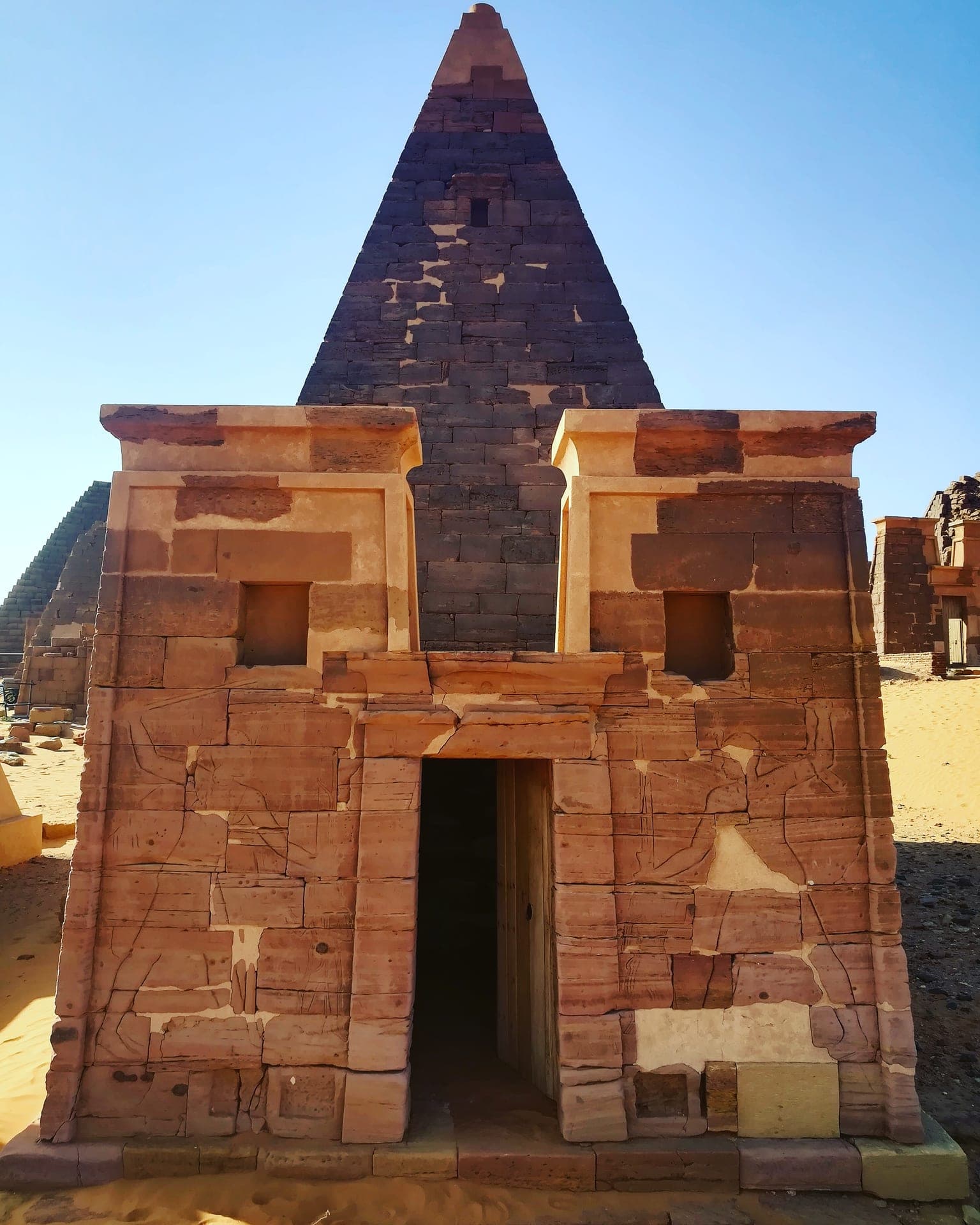
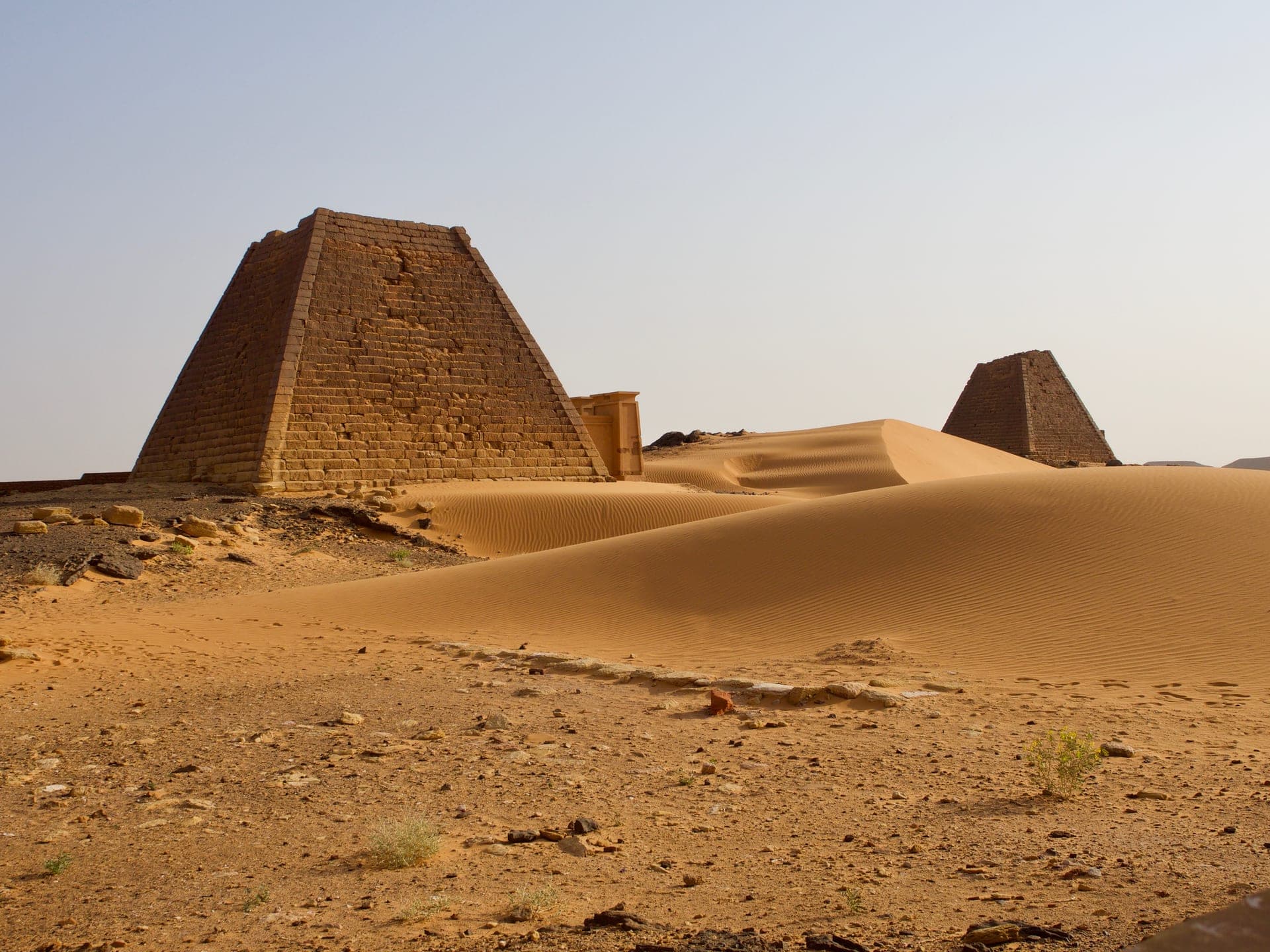
 Photo by Laurent de Walick (Meroe Pyramids), CC BY 2.0, via Wikimedia Commons
SudanTourism
Africa's third-largest country by area, Sudan holds more pyramids than Egypt across its Nubian and Napatan heritage sites — Meroe and Jebel Barkal both UNESCO World Heritage — but has been consumed since April 2023 by a devastating civil war that has displaced more of its population than any other conflict on Earth.
A country measured in horizons.
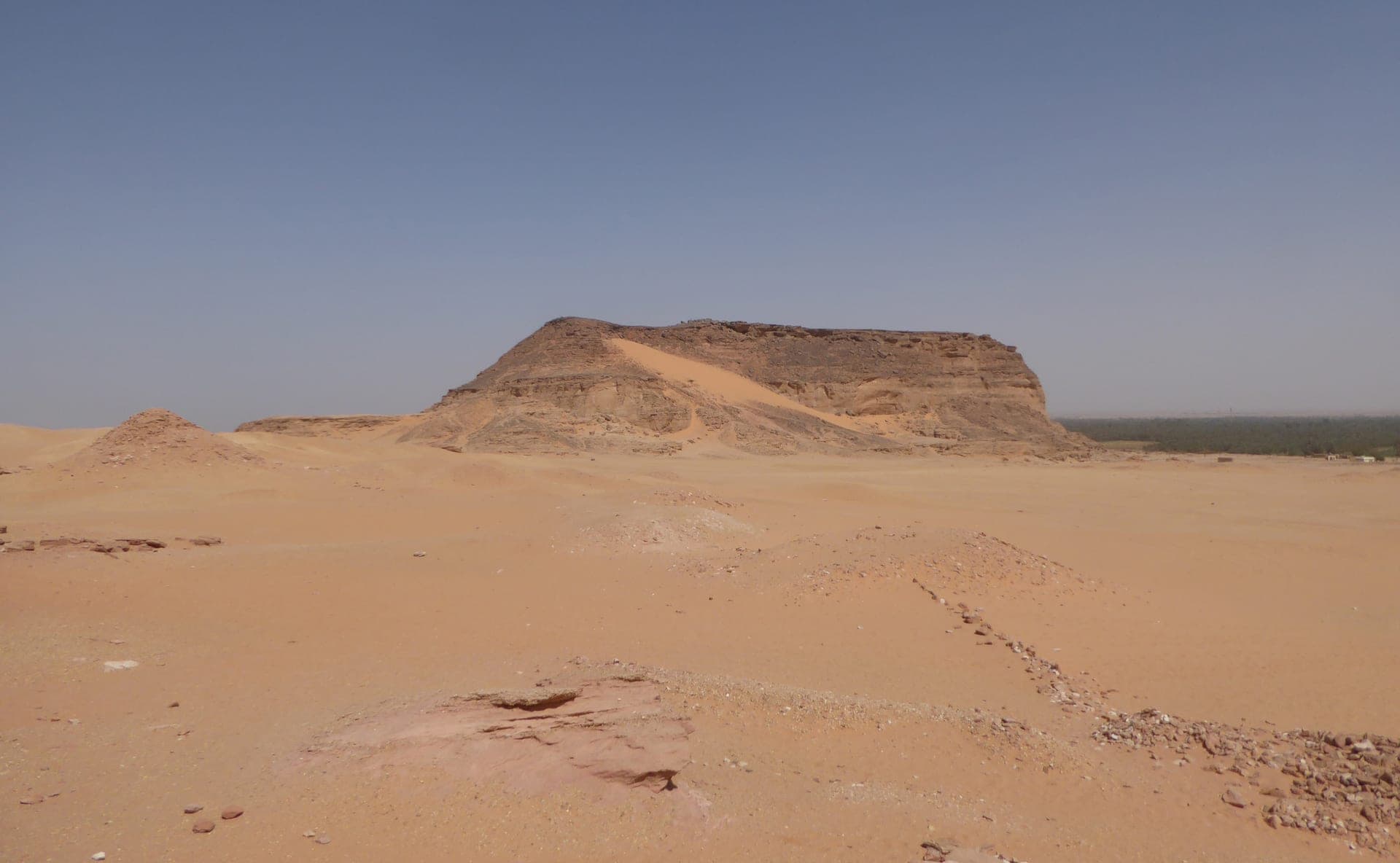
Sudan's Nile Valley preserves the legacy of the ancient Kingdom of Kush, whose rulers built more pyramids than their Egyptian neighbors to the north, if smaller and steeper ones. At Meroe, roughly 200 kilometres northeast of Khartoum, close to 200 Nubian pyramids rise from the desert as the necropolis of the Kingdom of Kush's later capital; UNESCO inscribed the Meroe site's pyramids, palaces and temples in 2011. Further upstream near the town of Karima, Jebel Barkal — a sacred mountain the ancient Egyptians and Kushites alike associated with the god Amun — anchors a second UNESCO-listed cluster of Napatan-era pyramids and temples, a sister site to Meroe within the same 'Napatan region' inscription. Both sites have so far escaped direct combat damage in the current war, though reporting from Meroe describes a site now essentially deserted, watched over by a handful of caretakers, with only occasional visitor groups since fighting began — a stark contrast to its UNESCO status. Sudan's antiquities more broadly have been targeted for looting by armed groups on both sides of the conflict as a documented war-financing tactic, and UNESCO's Heritage Emergency Fund has stepped in to support protection and stabilization work at both Meroe and Jebel Barkal. Southeast of Khartoum near the Ethiopian border, Dinder National Park is one of Sudan's oldest protected areas and a designated UNESCO biosphere reserve, historically home to lions, giraffes and buffalo; its current wildlife populations and any tourism activity amid the ongoing war could not be confirmed from available reporting as of mid-2026, and should be treated as unclear rather than assumed intact.
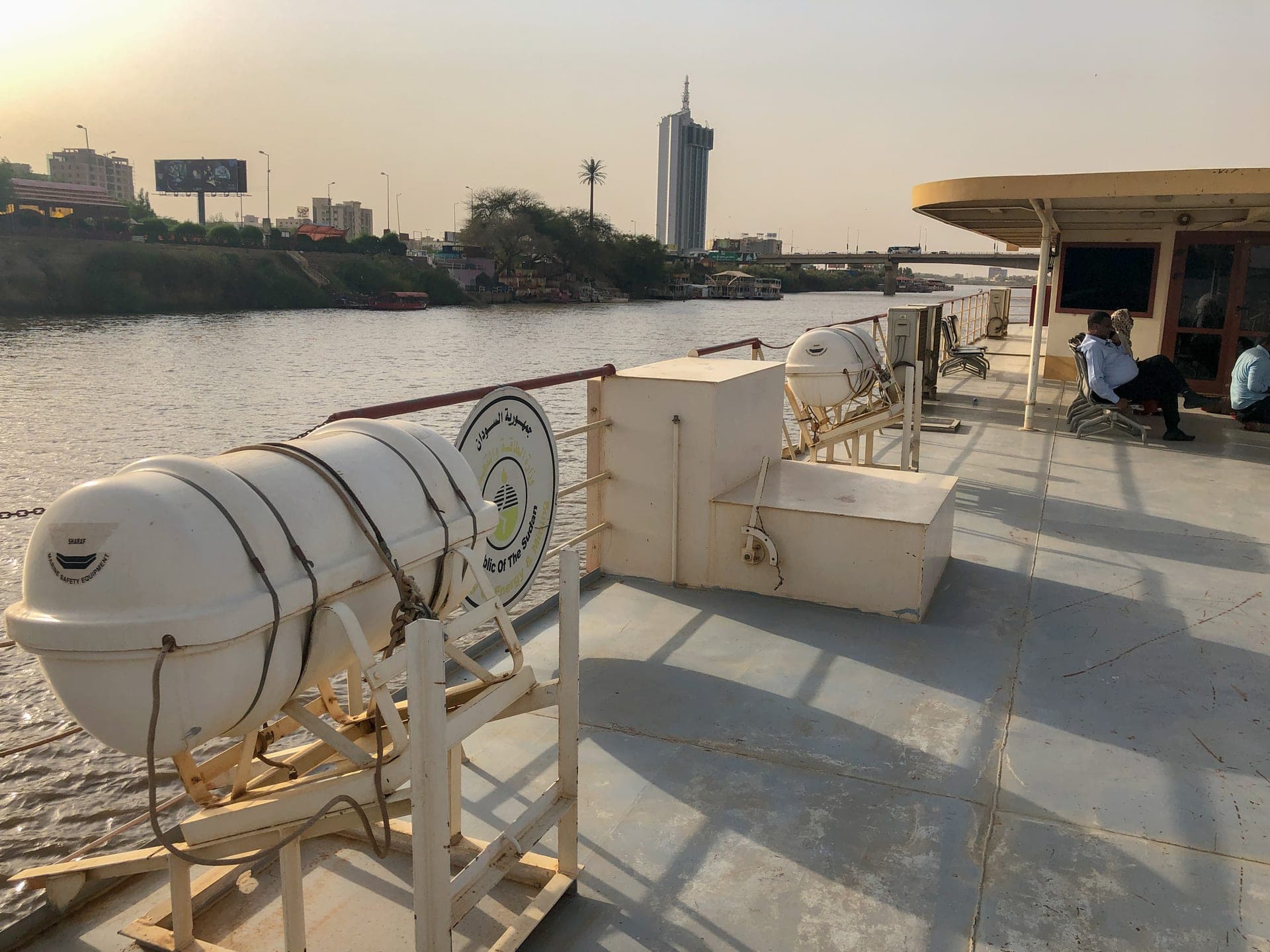
Sudan has been at civil war since April 2023, when long-simmering tension between the Sudanese Armed Forces (SAF), led by Gen. Abdel Fattah al-Burhan, and the paramilitary Rapid Support Forces (RSF), led by Mohamed 'Hemedti' Dagalo, erupted into open fighting. SAF recaptured Khartoum through late 2025, and Sudan's government formally returned to the capital on 11 January 2026 after roughly two and a half years of displacement; over a million residents have since returned, and Khartoum International Airport has reopened, but the city's central commercial and administrative district — the site of the heaviest fighting — remains largely destroyed and is slated for demolition and redesign, with the UN estimating well over USD 350 million needed just to restore basic infrastructure. The RSF, meanwhile, controls most of Darfur, having completed its capture of the region with the fall of El-Fasher, and continued fighting in Kordofan through early 2026; the RSF and allied groups have moved toward declaring a parallel, Darfur-based government, though the timing and current status of this remained unconfirmed as of this research pass. A Quad-brokered ceasefire roadmap was rejected by al-Burhan within days of its September 2025 proposal, and no lasting ceasefire has held. The result is the world's largest displacement crisis — roughly 13.6 million people uprooted, including 9.3 million internally displaced and 4.3 million refugees abroad — with two-thirds of Sudan's population, some 33.7 million people, in need of humanitarian aid in 2026, acute food insecurity affecting 21 million, and confirmed famine conditions in parts of North Darfur around the Zamzam camp area. The US State Department rates Sudan Level 4 — Do Not Travel (advisory renewed 15 May 2026), citing armed conflict, crime, terrorism, and landmines; the US Embassy in Khartoum has been suspended since April 2023 and offers no routine or emergency consular services.
Sudan's ordinary visa process — a visa from a Sudanese diplomatic mission in advance, with visa-on-arrival available only for limited categories such as those with Sudanese ancestry or marriage ties, plus a yellow fever vaccination requirement — remains the formal policy, but normal processing is disrupted by the war: embassy operations abroad are uneven, and international air access is itself unstable, with Khartoum International reopening for domestic, regional and international flights only in late March 2026 after a two-and-a-half-year closure, while Port Sudan's airport, which has served as the government's de facto hub during the war, has faced repeated disruption from drone strikes, including a sustained multi-day RSF attack in May 2025 that damaged the airbase, fuel depots and container terminal and prompted Sudan to cut diplomatic ties with the UAE over alleged RSF backing. In practice, independent tourism is not functioning under current conditions, and travel to Sudan in 2026 would be for essential or humanitarian purposes rather than leisure. Sudan's climate ranges from true desert in the north to semi-arid further south, with a dry season from roughly October to April — December and January are climatically the most comfortable months — set against a security situation that overrides any ordinary 'best time to visit' framing.
Practical info.
Climate
Best time: Dec–Jan climatically most comfortable (dry season Oct–Apr) — moot given the current Do Not Travel advisory and active civil war.
Visa & entry
Advance visa required; normal processing disrupted by the ongoing civil war. Sudan formally requires a visa from a Sudanese diplomatic mission in advance for most visitors (visa-on-arrival is limited to those with Sudanese ancestry or marriage ties), plus proof of yellow fever vaccination. Since the April 2023 outbreak of civil war between the Sudanese Armed Forces and the Rapid Support Forces, normal visa processing and international air access have both been disrupted and are unreliable. The US State Department rates Sudan Level 4 — Do Not Travel, and the US Embassy in Khartoum has offered no consular services since 2023.
Money
Sudanese pound (SDG). Mobile money is widely accepted; carry some cash for rural travel.
Safety & health
Anti-malarial cover for low-elevation regions; standard travel insurance recommended.
How is Sudan measured?
Tourism is the story; data is the context. Health, population, economy and climate indicators across Sudan — sourced from the World Bank, WHO and UNICEF.
See Sudan in numbers