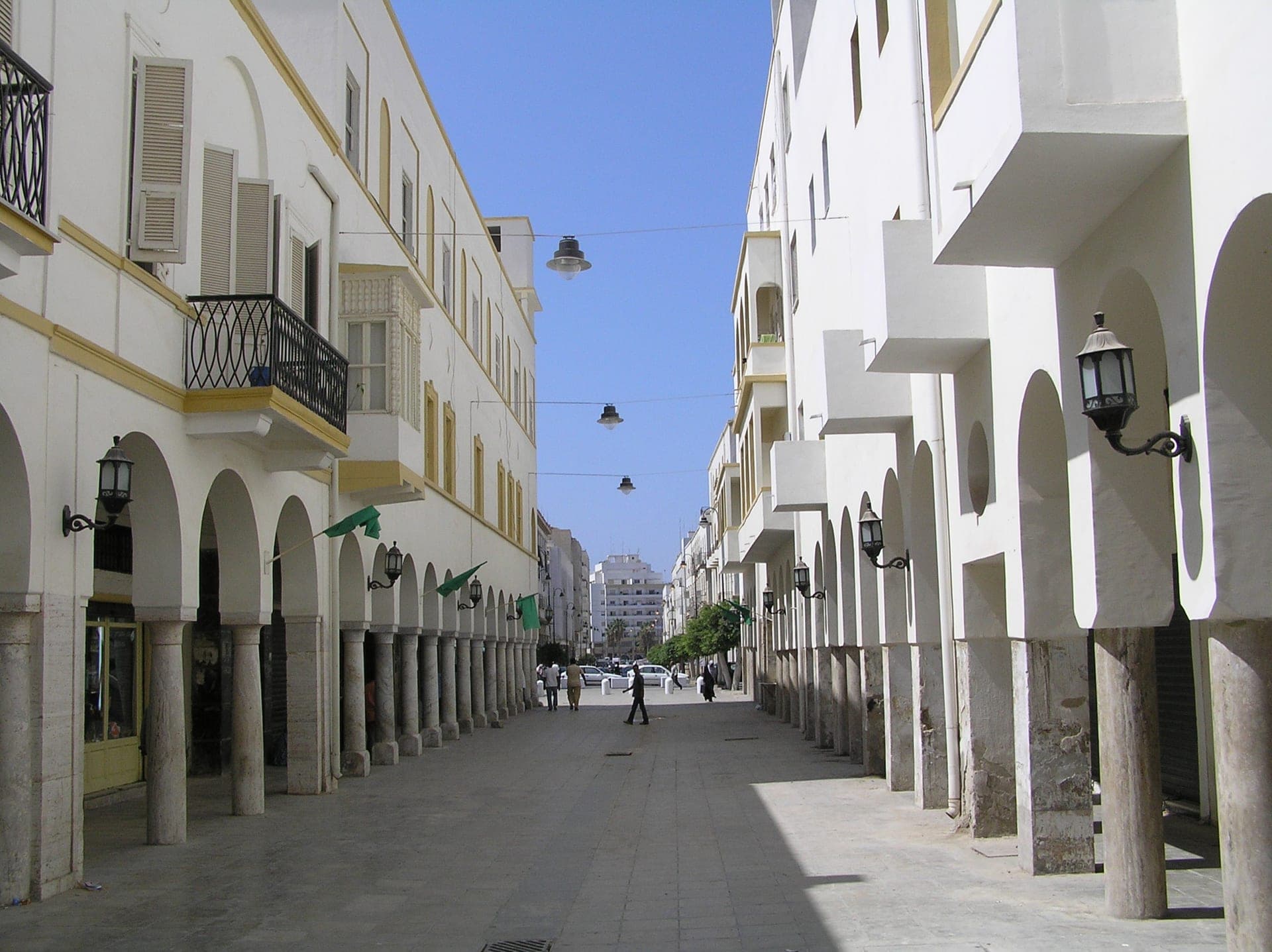
Photo by Jaw101ie (Tripoli coastline and skyline), Public Domain, via Wikimedia Commons
LibyaTourism
North Africa's largest country by area, Libya holds three UNESCO World Heritage sites of genuinely global rank — the Roman cities of Sabratha and Cyrene, and the Saharan mudbrick town of Ghadames — alongside a Mediterranean coastline and a political situation still split between rival governments more than a decade after the 2011 revolution.
A country measured in horizons.
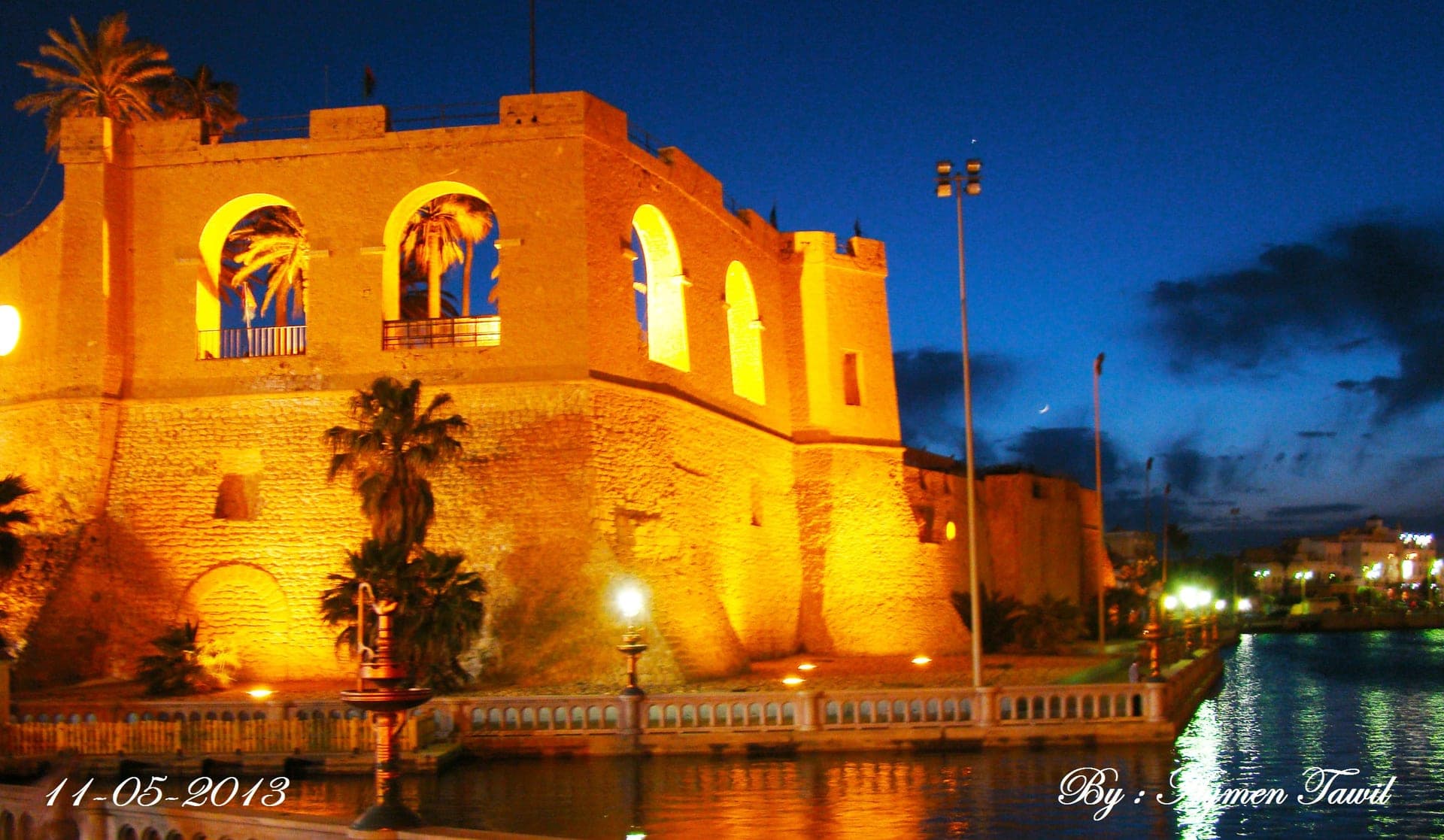
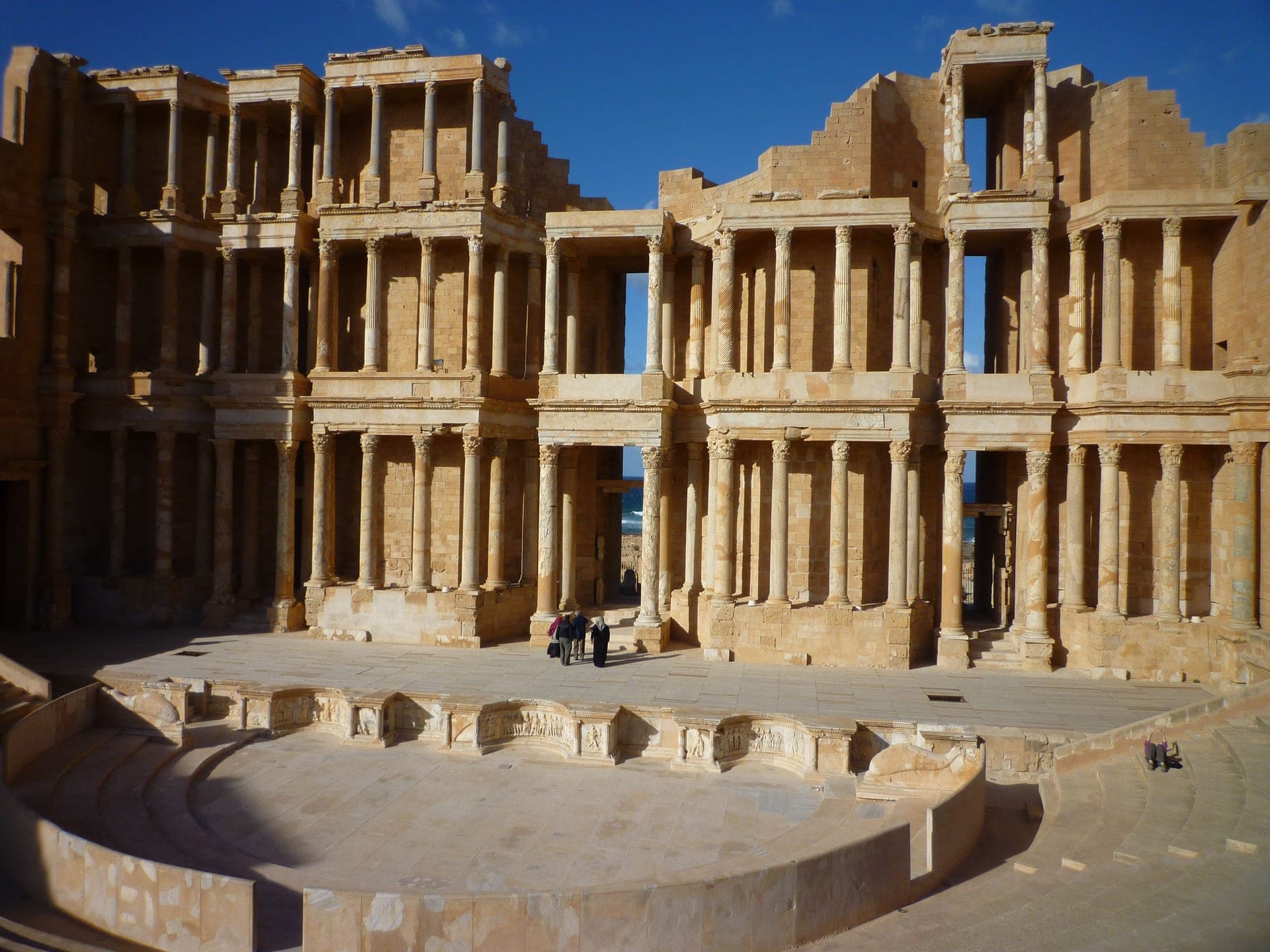
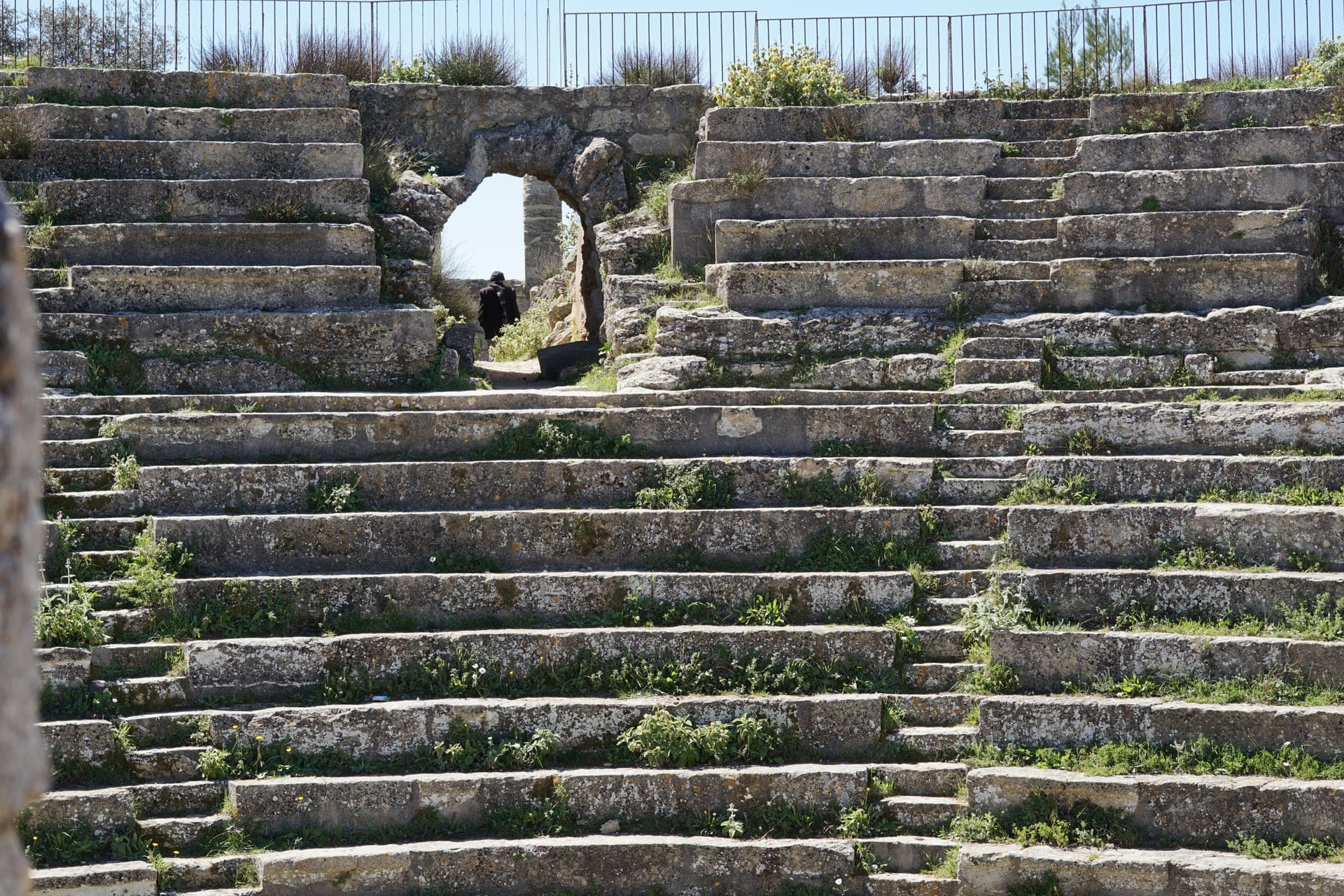
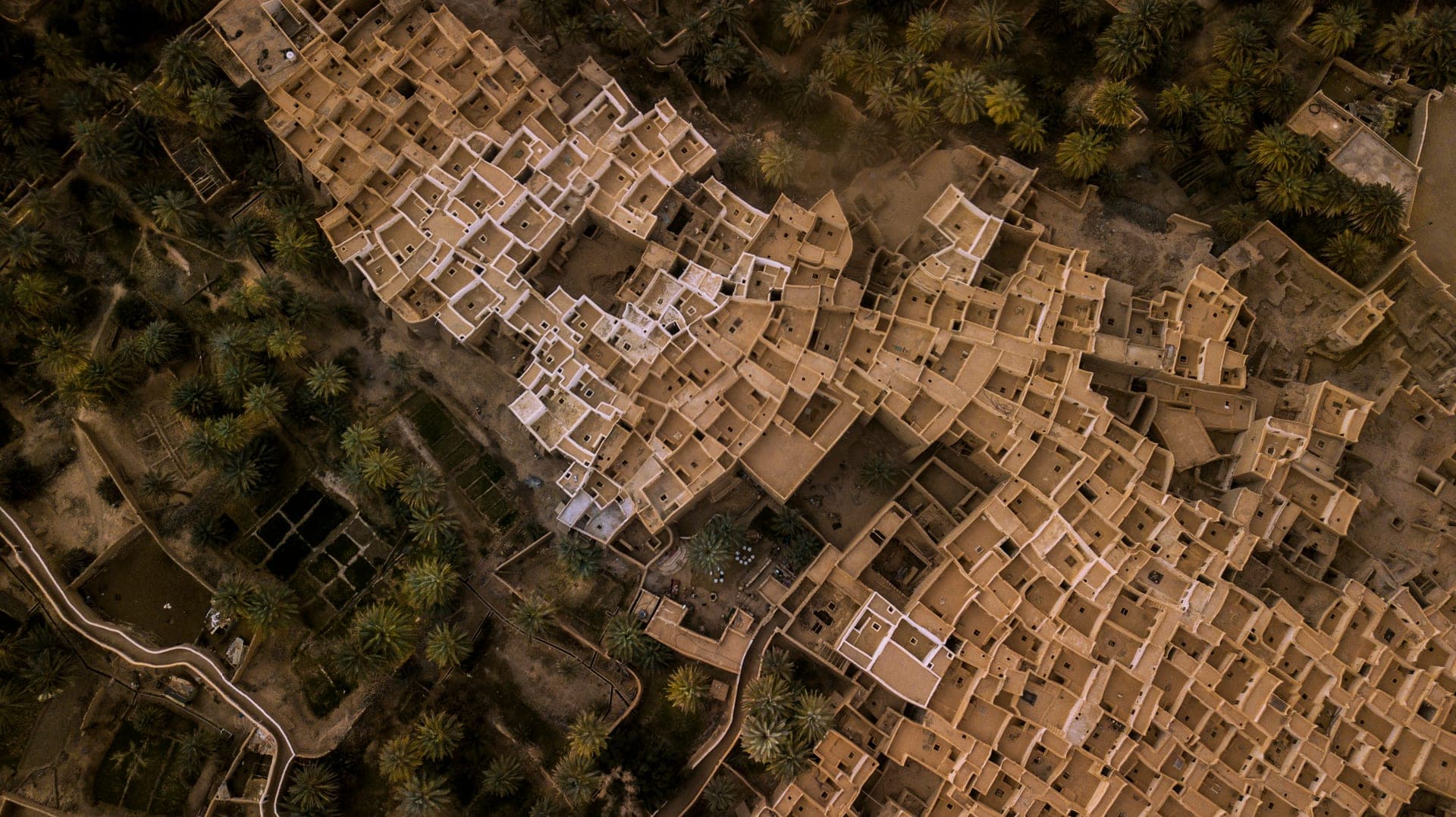
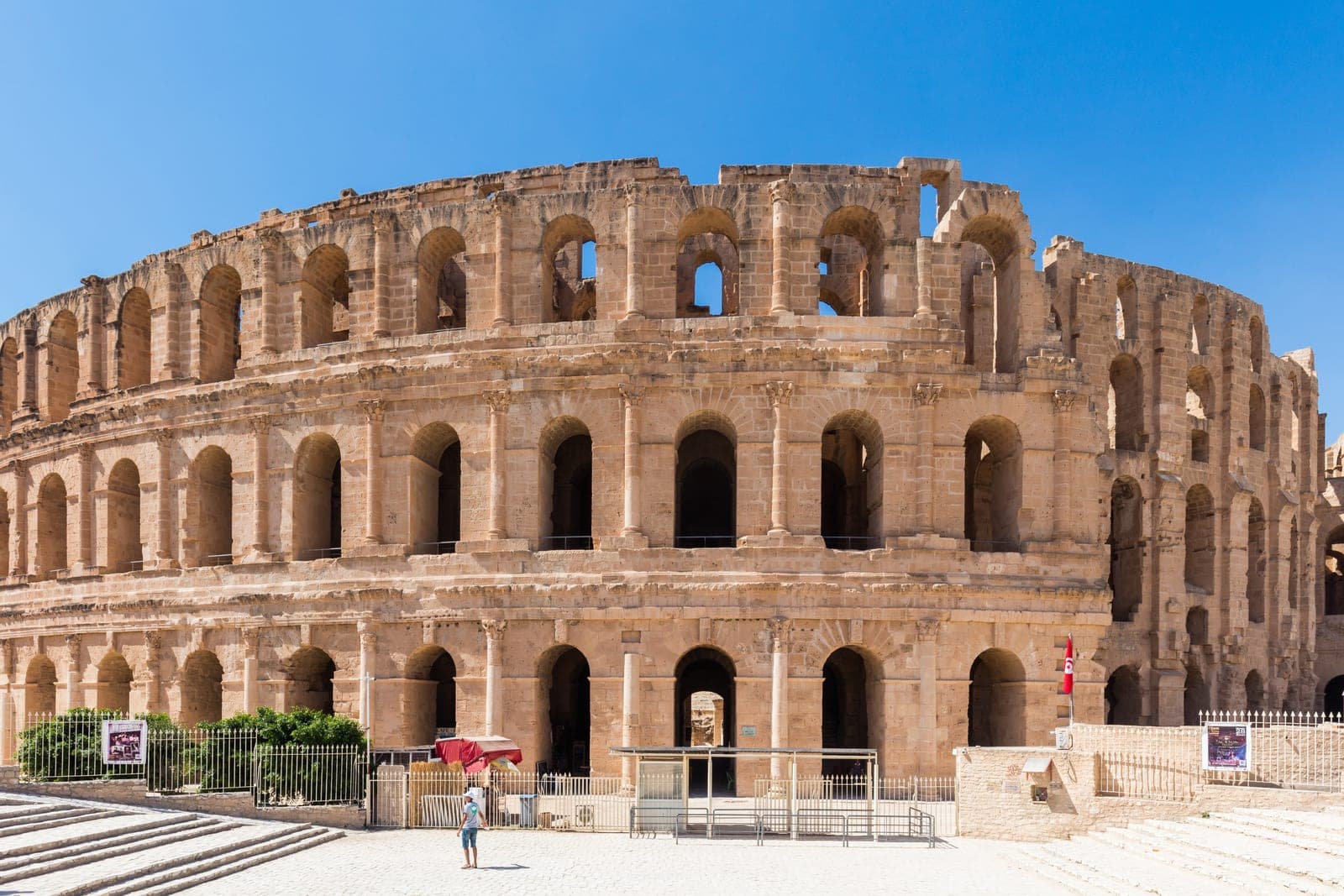
Libya's ancient remains rank among the best-preserved Roman and Greek sites anywhere on the Mediterranean's southern shore. West of Tripoli, Sabratha's amphitheatre, forum and Roman theatre trace the city's rise as a Phoenician trading post turned Roman provincial capital; UNESCO listed it as a World Heritage Site in 1982 and added it to the List of World Heritage in Danger in 2016, citing instability, conflict-related risk and coastal erosion that has damaged the vulnerable calcarenite stone of the harbor and bath complexes. Near modern Shahhat in the eastern Green Mountains, Cyrene was one of the principal cities of the ancient Greek world, founded by colonists from Thera in the 7th century BC; it too has been on the Danger List since 2017, and Storm Daniel's catastrophic September 2023 flooding damaged the Sanctuary of Apollo terrace and Valley Street, prompting an ongoing conservation effort backed by international grants. In the Sahara near the Algerian and Tunisian borders, Ghadames — the 'pearl of the desert' — is a very different kind of World Heritage site: a still-inhabited traditional oasis town of covered mudbrick passageways and rooftop terraces reserved for women, designed for a climate that regularly exceeds 40°C. Ghadames was removed from the Danger List in July 2025 after a solar-lighting rehabilitation project, and by 2026 was being described as newly reopening to international visitors via Tripoli — a rare good-news story in the current landscape. In Tripoli itself, the Red Castle (Assaraya al-Hamra), the old Ottoman-era fortress overlooking the medina, reopened in December 2025 as the National Museum of Libya after being closed since 2011, initially to school groups only.
Libya has had no unified national government since the 2011 fall of Muammar Gaddafi and no national elections since 2014. Since 2014 the country has been split between the Tripoli-based, UN-recognized Government of National Unity (GNU), led by Prime Minister Abdul Hamid Dbeibah, and a rival Government of National Stability based in the east and backed by the House of Representatives in Tobruk and Khalifa Haftar's Libyan National Army (LNA), headquartered in Benghazi. In April 2026 the two sides passed a first unified state budget since 2013 — a genuinely notable cooperative step — but this has not translated into political reunification, elections, or a single line of authority. Foreign forces remain embedded on both sides: Turkey continues to back the GNU militarily, while Russia's Africa Corps (the successor to the Wagner Group) supports Haftar's LNA in the east and uses Libyan airbases as a transit hub into the Sahel. Both the US State Department (Level 4 — Do Not Travel, citing crime, terrorism, unexploded landmines and cluster munitions, civil unrest, kidnapping and armed conflict) and the UK FCDO (which as of mid-2026 advises against all travel to Libya outside Tripoli, Benghazi and Misrata, and against all but essential travel even within those three cities) treat the country as unsuitable for ordinary tourism.
Because Libya has no single government, it does not have a single, uncontested visa process either. Libya launched an official e-visa system in March 2024, covering roughly 40 nationalities at around USD 63 for a 90-day-validity, single-entry tourist visa allowing a stay of up to 30 days — but this system is administered through Tripoli/GNU-recognized channels, and independent tourism is not permitted anywhere in the country: visitors are required to travel with a licensed Libyan tour operator, typically with a mandatory tourism-police escort. There is no clearly documented parallel official visa process through the eastern administration; on-the-ground arrangements for travel to Benghazi or Cyrene would presumably route through LNA-aligned facilitators, but this is not well documented and should be treated as unverified rather than a settled second channel. Entry is barred to Israeli nationals and to anyone with evidence of travel to Israel in their passport. Libya's Mediterranean coast has a classic arid-Mediterranean climate — mild, wetter winters and hot, dry summers — with March–May and September–November generally the most comfortable months for visiting archaeological sites; the Saharan interior around Ghadames is best visited October–April, since summer daytime temperatures there can reach the mid-40s°C.
Practical info.
Climate
Best time: Mar–May and Sep–Nov on the Mediterranean coast; Oct–Apr in the Saharan interior (Ghadames) — summer heat there can reach mid-40s°C.
Visa & entry
GNU-administered e-visa only (~USD 63, 30-day stay); tour-operator escort mandatory; no unified national process. Libya's official e-visa system, launched March 2024, is administered through the Tripoli-based, UN-recognized Government of National Unity and covers roughly 40 nationalities at approximately USD 63 for up to a 30-day stay. Independent tourism is not permitted — a licensed Libyan tour operator and, typically, a tourism-police escort are required throughout. Because Libya has a rival eastern administration based in Benghazi, there is no single, uncontested national visa process; any eastern-administration entry arrangements are not clearly documented and should be treated as unverified. The US State Department rates Libya Level 4 — Do Not Travel, and the UK FCDO advises against all but essential travel even in Tripoli, Benghazi and Misrata.
Money
Libyan dinar (LYD). Mobile money is widely accepted; carry some cash for rural travel.
Safety & health
Anti-malarial cover for low-elevation regions; standard travel insurance recommended.
How is Libya measured?
Tourism is the story; data is the context. Health, population, economy and climate indicators across Libya — sourced from the World Bank, WHO and UNICEF.
See Libya in numbers