Photo by dronepicr, CC BY 2.0, via Wikimedia Commons
MauritiusTourism
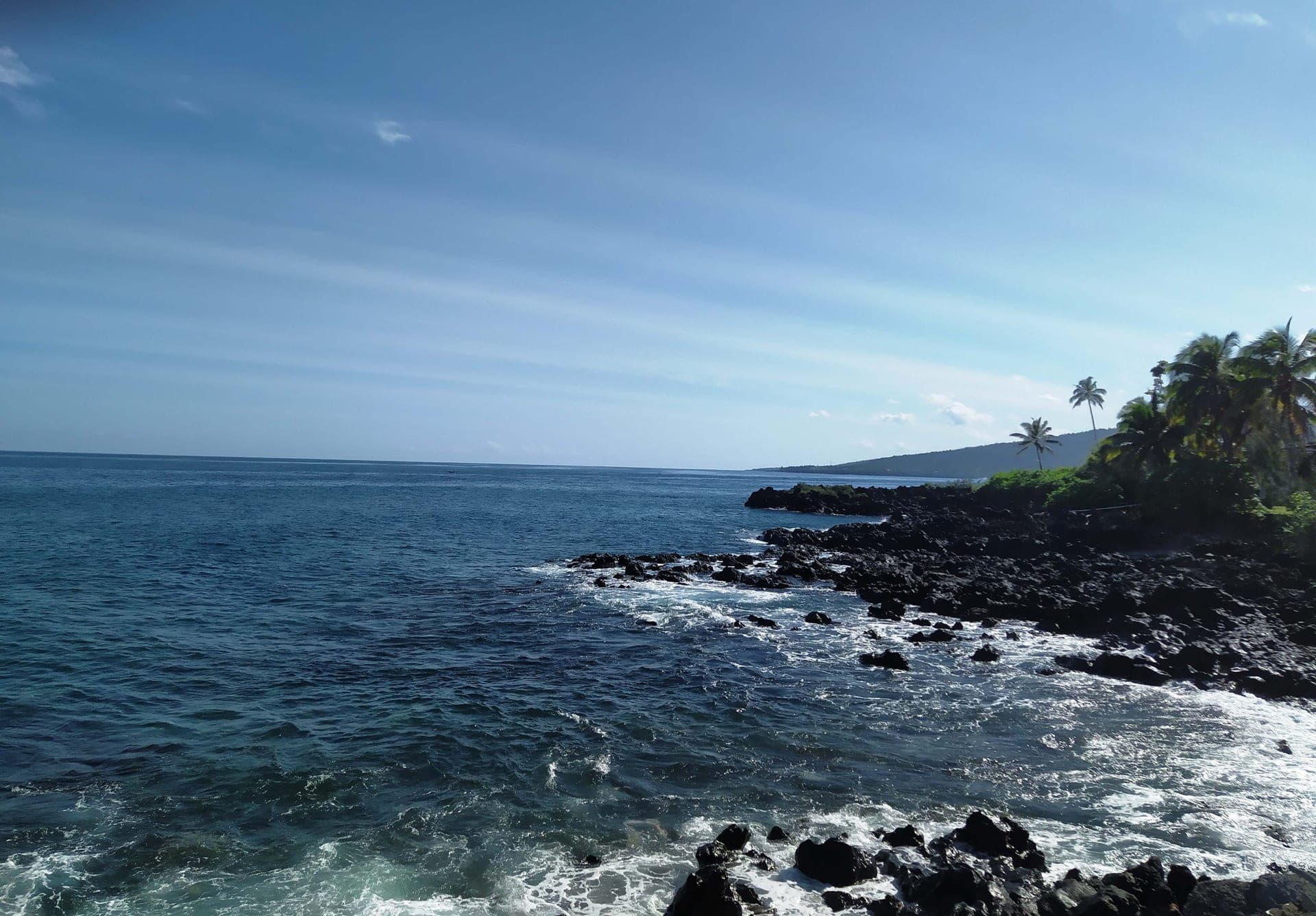
A volcanic island of 2,040 km² in the Indian Ocean, Mauritius weaves together Creole, Hindu, Muslim, and Chinese traditions around a coastline of white-sand lagoons, coral reefs, and the basalt pyramid of Le Morne Brabant — and adds inland geological oddities like the seven-coloured earth of Chamarel and the cloud-forest gorges of Black River.
A country measured in horizons.
Mauritius sits roughly 800 km east of Madagascar in the Indian Ocean, a volcanic island that rose from a mid-ocean hotspot and has been above sea level for only about eight million years — geologically young enough that it still has no indigenous land mammals. Its 2,040 km² divide into a central plateau at 300–600 metres, deeply eroded gorges and forest in the southwest, and a coastal plain ringed by a coral lagoon. The island's Black River Gorges National Park covers 6,574 hectares of endemic ebony forest and is the last significant refuge for native Mauritian birds, including the echo parakeet and Mauritius kestrel, both pulled back from single-digit population counts in the 1980s through intensive captive breeding programmes. Offshore, the Blue Bay Marine Park southeast of Mahébourg shelters a coral garden containing 108 species of coral and 233 species of fish, with a resident brain coral over 1,000 years old. The Seven Coloured Earths at Chamarel — dunes of volcanic soil in red, brown, violet, green, blue, purple, and yellow — are a product of distinct cooling rates of the same basalt lava in different microclimates.
Mauritius was uninhabited until the Dutch East India Company established a brief settlement in 1638; the French took the island in 1715 and renamed it Île de France, building Port Louis and importing enslaved people from Madagascar, Mozambique, and West Africa. Britain captured the island in 1810 and abolished slavery in 1835. To replace plantation labour, the colonial government organised the mass immigration of indentured workers from India (over 500,000 between 1835 and 1907), China, and East Africa — the scale and system was significant enough that UNESCO designated Aapravasi Ghat, the Port Louis immigration depot where labourers first landed, as a World Heritage Site in 2006. Le Morne Brabant, the basalt peninsula in the southwest, is also UNESCO-listed (2008) as a memorial to the enslaved people who hid in its cliff caves and, according to oral tradition, threw themselves into the sea rather than be recaptured. The country became independent in 1968 and a republic in 1992, and today ranks among sub-Saharan Africa's most stable democracies with one of the continent's highest Human Development Index scores.
Mauritius is served by Sir Seewoosagur Ramgoolam International Airport (MRU), near Mahébourg in the southeast, with direct connections to London, Paris, Frankfurt, Dubai, Nairobi, and Johannesburg. Citizens of the EU, UK, US, Canada, Australia, and most other Western countries receive a free visitor's permit on arrival for up to 90 days; no visa application is required in advance. No yellow fever vaccination is needed unless arriving from a yellow fever-endemic country. The Mauritian rupee (MUR) is the currency; hotels and resorts widely accept major cards and commonly price in euros or dollars. The best travel window is May through December — cooler, drier, and calmer on both coasts; January through March is cyclone season (rare but potentially severe), and June–August can bring strong south-east trade winds to the east coast while the west remains sheltered. The west coast around Flic en Flac and Le Morne gets the most reliable sunshine year-round.
Practical info.
Climate
Best time: May–December (cooler, drier; both coasts manageable); January–March is cyclone season.
Visa & entry
Visa-free on arrival for most nationalities (EU, UK, US, Australia, Canada and most others) for up to 90 days. Most nationalities receive a free visitor's permit on arrival — no advance visa required. EU, UK, US, Canadian, Australian, and most Commonwealth passport holders enter for up to 90 days. Passport must be valid for at least 6 months beyond arrival date; onward ticket required. No yellow fever vaccine required unless arriving from an endemic country. No visa fee. Extensions possible at the Passport and Immigration Office in Port Louis.
Money
Mauritian rupee (MUR). Mobile money is widely accepted; carry some cash for rural travel.
Safety & health
Anti-malarial cover for low-elevation regions; standard travel insurance recommended.
How is Mauritius measured?
Tourism is the story; data is the context. Health, population, economy and climate indicators across Mauritius — sourced from the World Bank, WHO and UNICEF.
See Mauritius in numbers