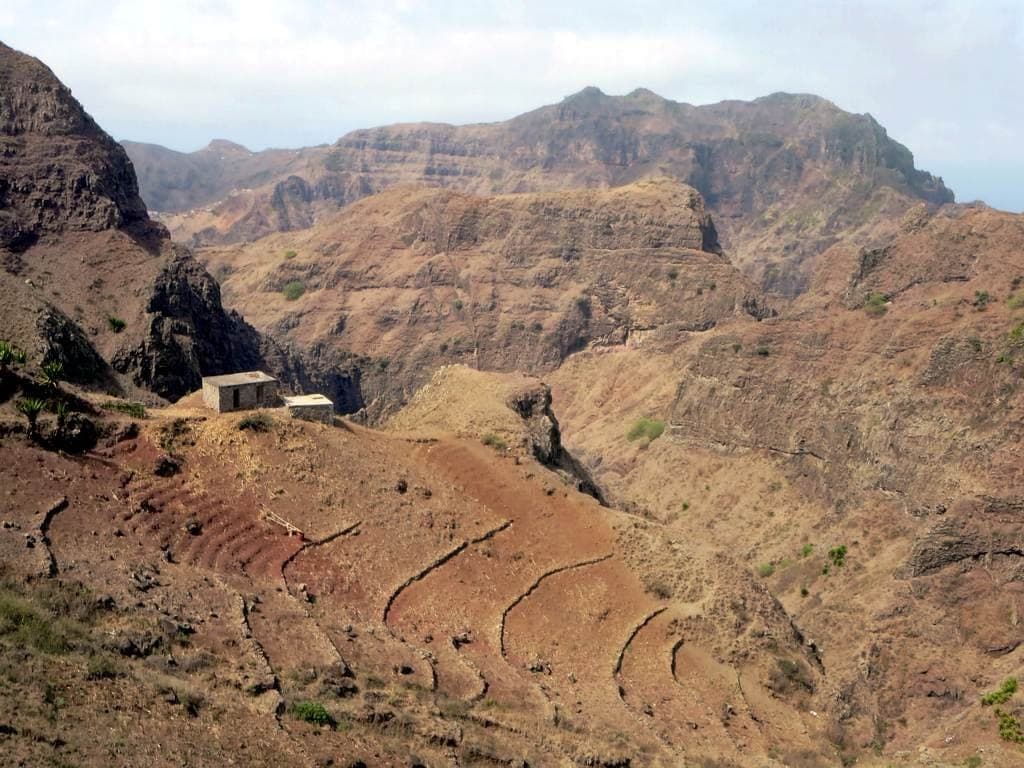
Photo by Herbert Wie, CC BY-SA 4.0, via Wikimedia Commons
Cabo VerdeTourism
Ten volcanic islands off the West African coast, Cabo Verde pairs Pico do Fogo — an active volcano with a village inside its caldera — with the salt-white beaches of Sal, the morna music and harbor life of Mindelo, and Cidade Velha, the oldest European colonial settlement in the tropics.
A country measured in horizons.
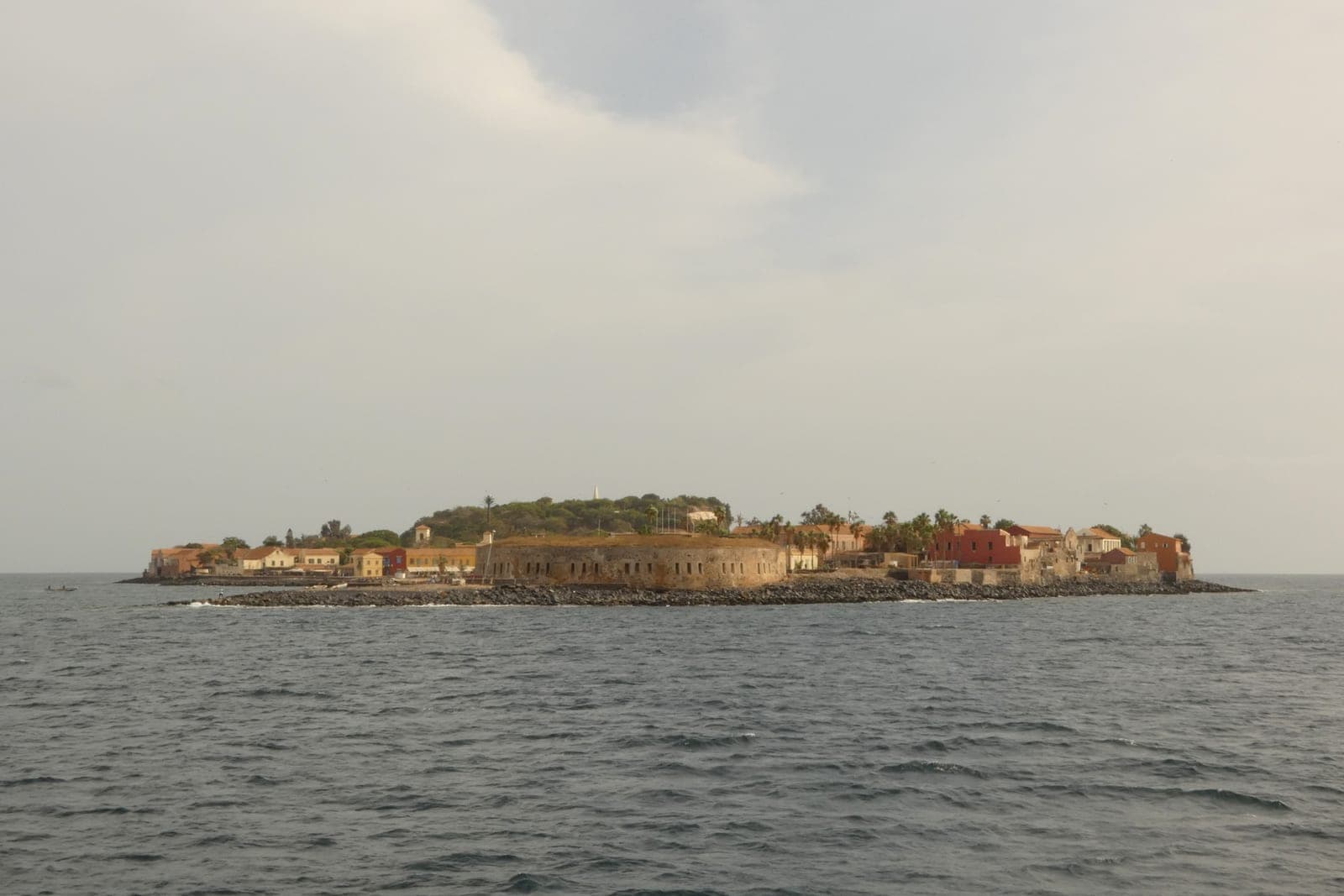
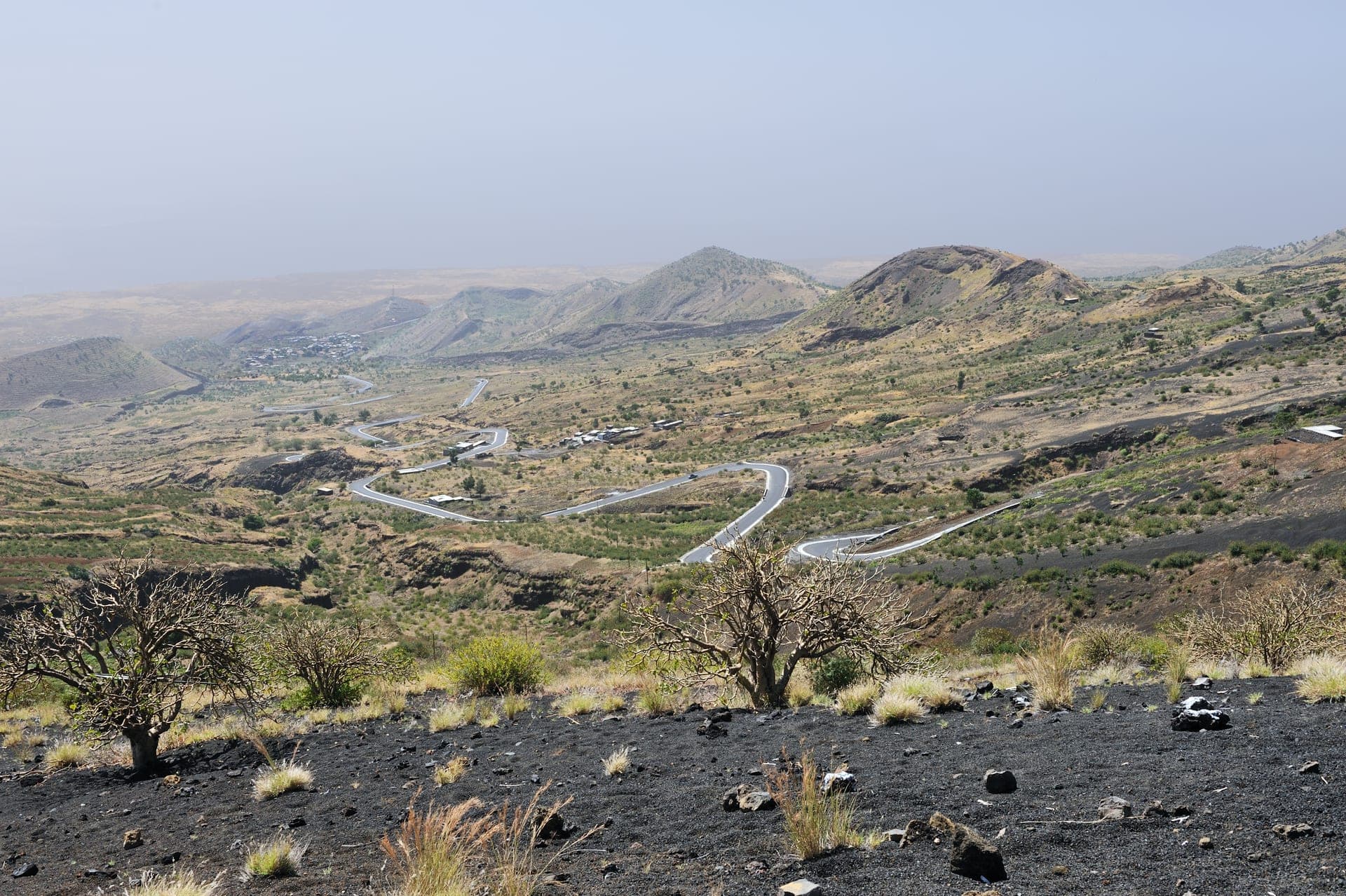
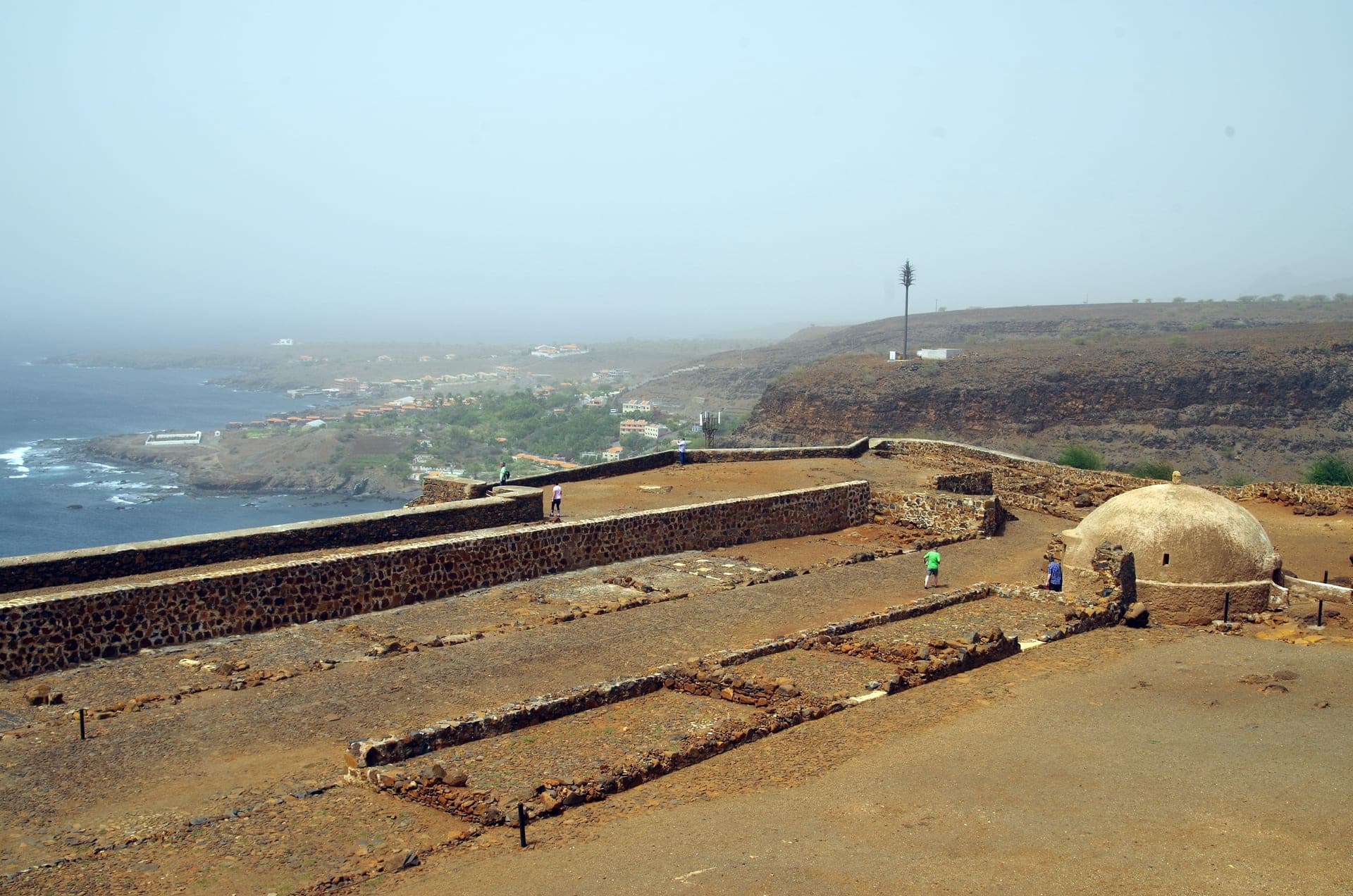
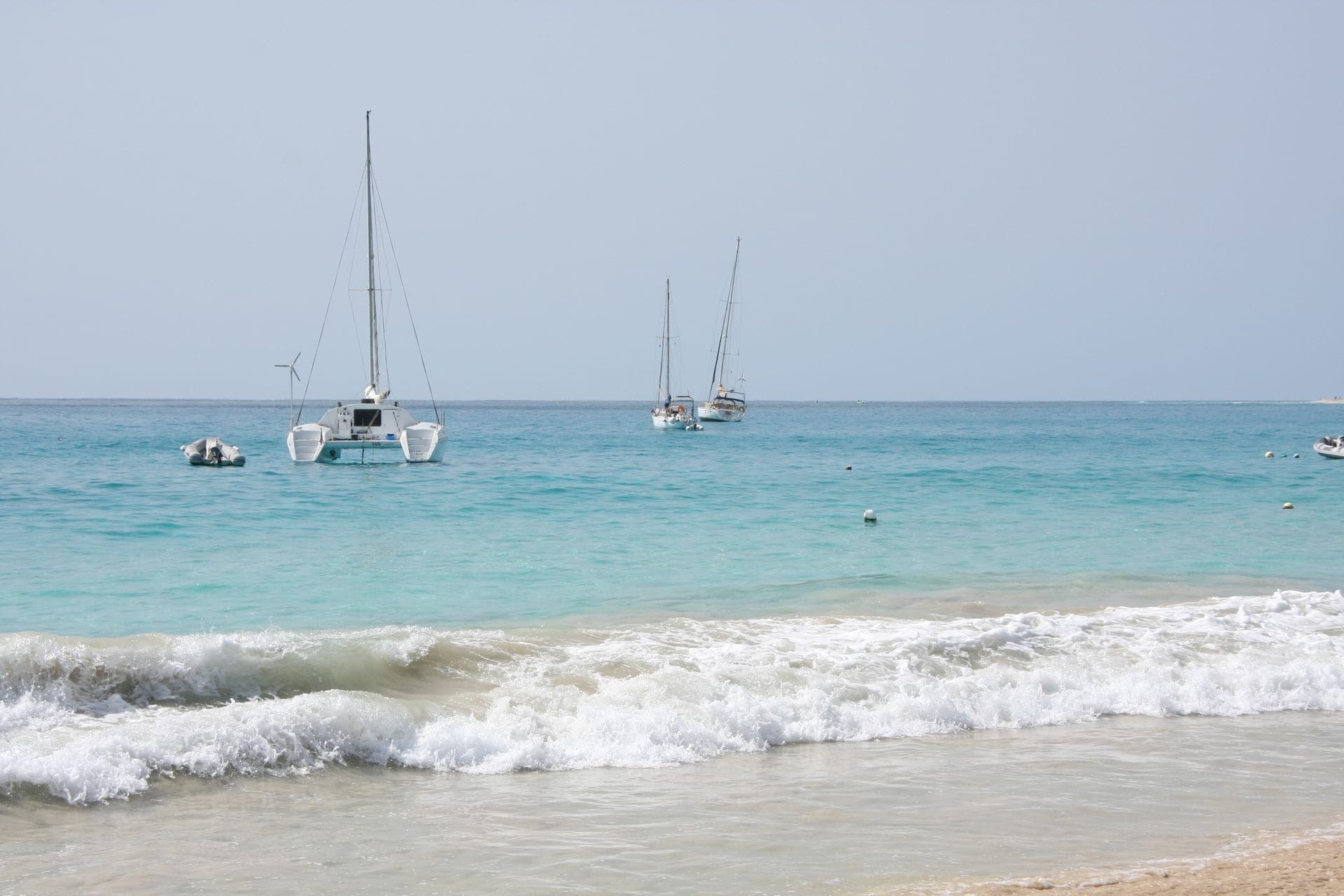
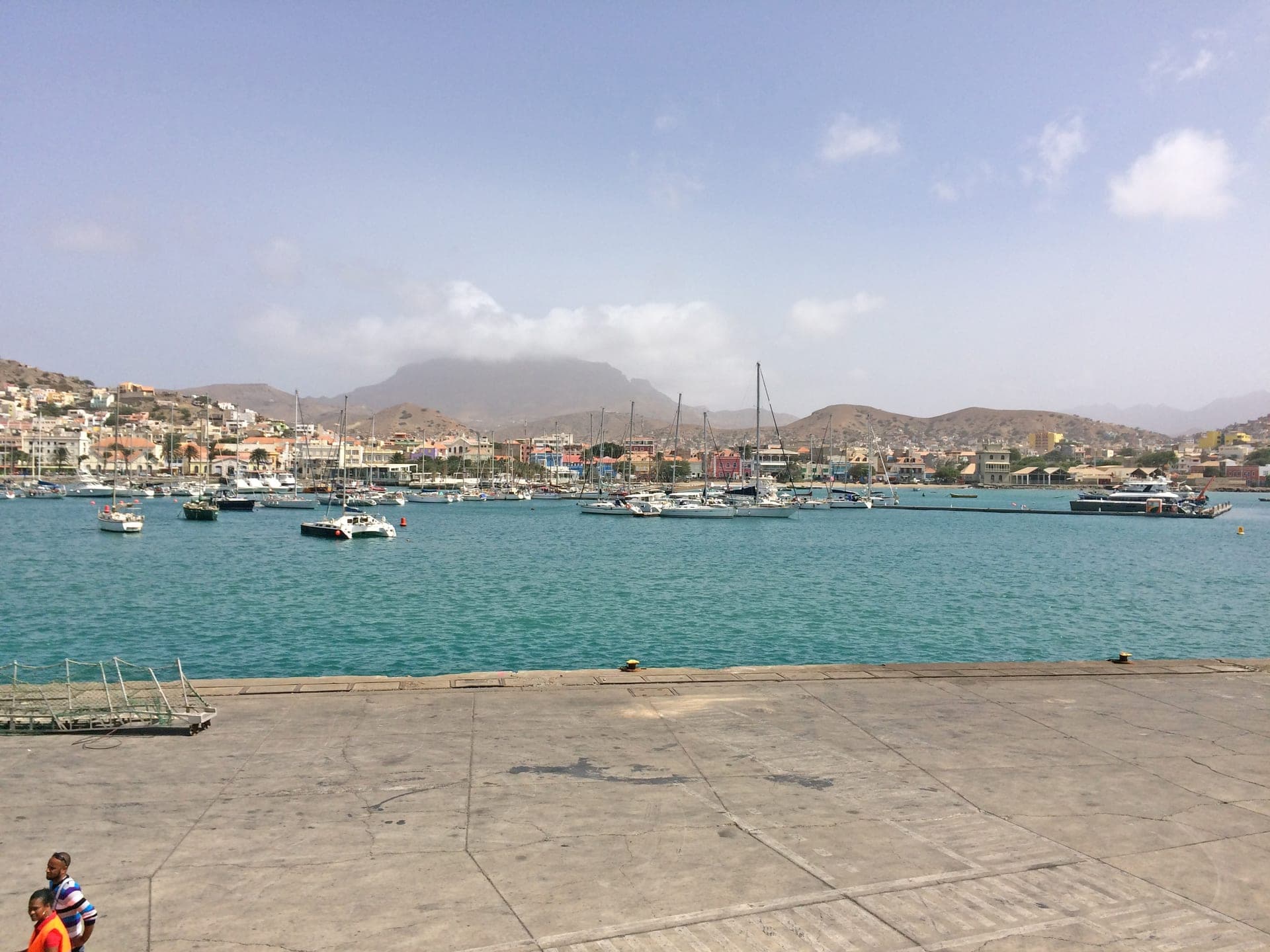
Cabo Verde's ten islands split into windward (Barlavento) and leeward (Sotavento) groups, each volcanic in origin but strikingly different in character. Fogo, the youngest and most active, is a single 2,829-metre volcano whose 1680 eruption forced a mass evacuation and whose most recent eruption, in 2014, buried the village of Portela under lava; today the village of Chã das Caldeiras sits inside the volcano's own caldera, its farmers growing wine grapes in volcanic soil in the shadow of the still-active cone. Sal and Boa Vista, flatter and drier, hold the country's main beach resorts — Santa Maria on Sal is the busiest, its clear water and steady trade winds drawing swimmers, divers, and kitesurfers alike. Santiago, the largest island and home to the capital Praia, holds Cidade Velha: founded in 1462, it was the first European colonial settlement in the tropics and a key staging point in the trans-Atlantic slave trade, now a UNESCO World Heritage Site anchored by the clifftop Real Fortaleza de São Filipe, built by the Portuguese in the 1590s after Francis Drake's 1585 raid. Santiago's interior, the Serra Malagueta range, offers cool highland hiking through terraced farms and cloud forest remnants holding endemic birds found nowhere else. Mindelo, on São Vicente, is the cultural capital — a natural harbor town that produced Cesária Évora and the morna musical tradition, its waterfront still lined with sailboats and colonial-era buildings.
Portuguese sailors reached the uninhabited archipelago in 1456 and settled it from 1462, making Cabo Verde a hub of the transatlantic slave trade for centuries afterward — a history the country now confronts directly through Cidade Velha's UNESCO listing and its Creole culture, a genuine Afro-Portuguese synthesis rather than either heritage alone. Independence came peacefully from Portugal in 1975, and Cabo Verde has since built one of Africa's steadiest democratic records: the 2026 V-Dem Democracy indices rank it jointly second-most-democratic on the continent alongside Mauritius and South Africa, with a functioning multiparty system, a National Assembly, and a president (José Maria Neves) serving as head of state alongside an appointed prime minister. Emigration has shaped the country as much as anything internal — more Cabo Verdeans live abroad, mostly in the US and Europe, than on the islands themselves, and remittances remain a pillar of the economy alongside tourism and fishing.
Most international flights land at Amílcar Cabral International Airport on Sal or Nelson Mandela International in Praia. Cabo Verde has waived visa requirements for EU, UK, US, Canadian, and several other nationalities for stays up to 30 days since 2019, but as of 1 January 2026 it ended visa-on-arrival issuance for 96 other nationalities, who must now arrange a visa through a Cabo Verdean embassy before travel. Everyone, regardless of visa status, must pre-register through the EASE (Embarque/Desembarque) online portal up to 5 days before arrival and pay the Airport Security Fee (TSA); from 1 July 2026, travelers who skip this step pay double the fee at the border. November through June is the dry season and the best window for both beach travel on Sal and Boa Vista and hiking on Santiago and Fogo; the short rainy season runs August through October, concentrated on the mountainous islands.
Practical info.
Climate
Best time: November–June (dry season across the islands); August–October brings the short rains, mainly on mountainous islands.
Visa & entry
Visa waiver for EU/UK/US/Canada and others (30 days); embassy visa required for 96 other nationalities since Jan 2026. Cabo Verde has waived visa requirements for EU, UK, US, Canadian, and several other nationalities for stays up to 30 days since 2019. As of 1 January 2026, visa-on-arrival ended for 96 other nationalities, who must now obtain a visa from a Cabo Verdean embassy before travel. All travelers, regardless of visa status, must pre-register online via the EASE portal up to 5 days before arrival and pay the Airport Security Fee (TSA) — skipping this incurs double the fee at the border as of 1 July 2026.
Money
Cape Verdean escudo (CVE). Mobile money is widely accepted; carry some cash for rural travel.
Safety & health
Anti-malarial cover for low-elevation regions; standard travel insurance recommended.
How is Cabo Verde measured?
Tourism is the story; data is the context. Health, population, economy and climate indicators across Cabo Verde — sourced from the World Bank, WHO and UNICEF.
See Cabo Verde in numbers