Photo by William Haun (Rwhaun), CC BY-SA 4.0, via Wikimedia Commons
Burkina FasoTourism
Landlocked in the heart of West Africa, Burkina Faso shelters some of the continent's most striking landscapes — the needle-like sandstone spires of the Sindou Peaks, the Karfiguéla waterfalls near Banfora, the sacred crocodile pool of Bazoule, and the intricate geometric paintings of the Kassena royal court at Tiébélé.
A country measured in horizons.
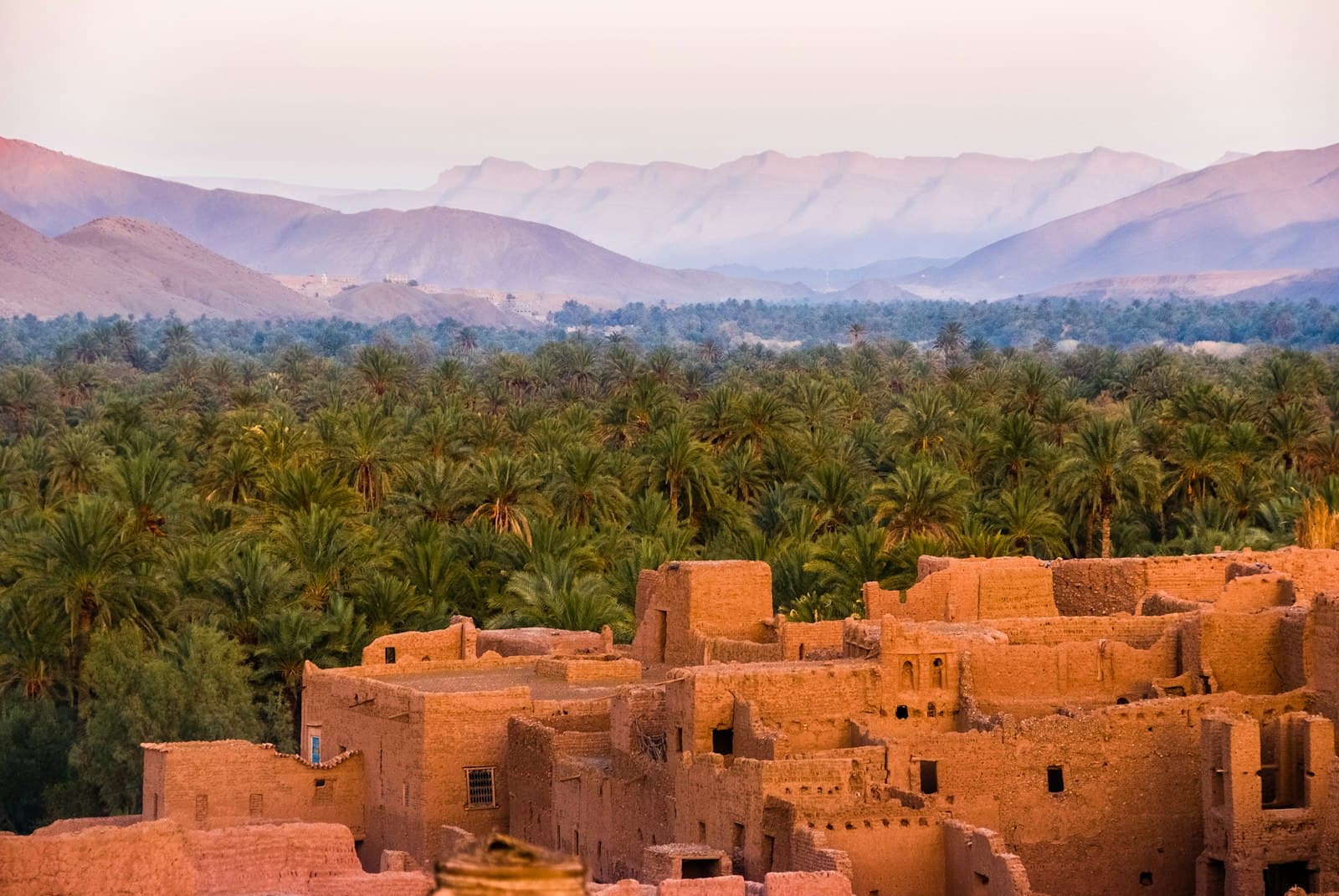
Burkina Faso occupies 274,222 km² of the Sahel and West African savanna, landlocked between Mali, Niger, Benin, Togo, Ghana, and Côte d'Ivoire. The country sits largely on the Mossi Plateau at 200–400 metres elevation, drained by three tributaries of the Volta: the Black Volta, Red Volta, and White Volta. The Cascades Region in the southwest is the most topographically dramatic — the Pics de Sindou are narrow sandstone chimneys sculpted by erosion over millions of years, the Karfiguéla waterfalls tumble through bamboo forest, and Lac de Tengrela harbours a habituated hippopotamus population. North of the plateau the terrain flattens into dry Sahel; south of it, Sudano-Guinean woodland takes over near the Ghanaian border. Average rainfall is 600–900 mm per year in the south and as little as 300 mm in the far north.
Pre-colonial Burkina Faso was dominated by the Mossi kingdoms — among the most durable political structures in sub-Saharan Africa — which maintained loose control of the plateau from roughly the 11th century until French conquest in the 1890s. French Upper Volta was established in 1919, dissolved and parcelled between neighbouring territories in 1932, and reconstituted in 1947 before independence in 1960. The country's trajectory changed radically when Captain Thomas Sankara seized power in 1983 and renamed the country Burkina Faso ('Land of Incorruptible People') the following year, launching a pan-African socialist programme of rapid rural development, women's rights reforms, and a fierce anti-corruption drive. Sankara was assassinated in a coup by Blaise Compaoré in 1987; Compaoré ruled for 27 years until popular protests forced him into exile in 2014. Two further coups in 2022 — Lieutenant-Colonel Paul-Henri Sandaogo Damiba in January, then Captain Ibrahim Traoré in September — installed the current military government aligned increasingly with Russian Africa Corps operators.
International flights arrive at Ouagadougou Airport (OUA); Air France, Brussels Airlines, and regional carriers serve the capital. Most nationalities require a visa; apply in advance through a Burkina Faso embassy, as online services have been inconsistent since the 2022 coups. Yellow fever vaccination is required. The US State Department maintains a Level 4 (Do Not Travel) advisory for the entire country, reflecting a jihadist insurgency by JNIM and ISGS that has spread from the Sahel across the north and east since 2015 and now denies the government effective control over an estimated 40–60% of territory. The south and southwest — where the Sindou Peaks, Banfora waterfalls, and Tiébélé painted courts are located — are less affected than the north, but no area is considered safe for tourist travel under current conditions. The November–February dry season is climatically the best window, with harmattan winds keeping temperatures below 35°C; the rainy season (June–September) can make rural roads impassable.
Practical info.
Climate
Best time: November–February (dry harmattan season, cooler temperatures); June–September rainy season makes roads difficult.
Visa & entry
Visa required for most nationalities; apply via nearest Burkina Faso embassy before travel. Most foreign nationals must obtain a visa in advance from a Burkina Faso embassy or consulate; online visa services have been inconsistent since the 2022 military coups. Yellow fever vaccination certificate is mandatory. ECOWAS nationals have freedom-of-movement rights. The US State Dept posts Level 4 (Do Not Travel) for the entire country due to the ongoing jihadist insurgency (JNIM, ISGS) and military government instability. UK, France, and most Western governments issue equivalent Avoid All Travel advisories.
Money
West African CFA franc (XOF). Mobile money is widely accepted; carry some cash for rural travel.
Safety & health
Anti-malarial cover for low-elevation regions; standard travel insurance recommended.
How is Burkina Faso measured?
Tourism is the story; data is the context. Health, population, economy and climate indicators across Burkina Faso — sourced from the World Bank, WHO and UNICEF.
See Burkina Faso in numbers